

How To Livestream To Facebook And Youtube Free
Table of Content:
- Preparations for Streaming to Multiple Platforms
- Streaming Solution 1: OBS (Screen Capture) + Restream
- Streaming Solution two: OBS (Screen Capture) + Multi-RTMP Plugin
- Streaming Solution iii: OBS (Screen Capture) + Cocky-host Server + FFmpeg Directives
- Streaming Solution 4: OBS (External Video Source) + Capture Card
- Streaming Solution 5: OBS (External Video Source) + NDI
- Streaming Solution 6: Hardware Encoder + Integrated Console
- FAQ well-nigh Multi-Platform Stream
Alive streaming your game or any video content to multiple platforms (YouTube, Twitch, Facebook, etc.) at the same time is like shooting fish in a barrel. In this tutorial, you will get six ways to do that with detailed examples.
And nosotros volition embrace things from open-source tools and free platforms for beginners to professional hardware and dedicated gear for gurus. Just take a look.
| Toll | Stability | Latency (high to depression) | Easy to Employ (hard to piece of cake) | Network Stress (heavy to light) | Computer Stress (heavy to light) | |
| 1: OBS + Restream | 0 | ★★ | ★★ | ★★★ | ★★★★ | ★☆ |
| 2: OBS + RTMP Plugin | 0 | ★★ | ★★★★ | ★★ | ★★ | ★☆ |
| 3: OBS + MonaServer + FFmpeg | 0 | ★★★ | ★★★★ | ★ | ★★ | ★☆ |
| 4: OBS + Capture Menu | ★★ | ★★★★ | ★★★★ | ★★ | ★★★☆ | ★★★★ |
| v: OBS + NDI | 0 | ★★★★ | ★★★★ | ★★ | ★★ | ★★★ |
| 6: Hardware Encoder | ★★★ | ★★★★★ | ★★★★★ | ★★★★ | ★★☆ | ★★★★★ |
Preparations for Streaming to Multiple Platforms
Before start, you need to check a couple of things and then the streaming will not get out of control.
i. Internet Condition
A sound and stable network condition ensure that your streaming will non exist laggy or stuttering. At the aforementioned time, the bandwidth required for streaming is up to your output resolution and bitrate.
According to Twitch, the recommended bitrates for dissimilar video resolutions are:
- 6000 kbps – 1080P 60fps
- 4500 kbps – 1080P 30fps
- 4500 kbps – 720P 60fps
- 3000 kbps – 720P 30fps
Note that the above bitrate is for a single stream only. So, if y'all are pushing video to multiple platforms simultaneously using your internet bandwidth, the network load will increase several times.
2. Computer Performance
When streaming using software, the video encoding codec (X264, QSV, X265) rely heavily on hardware computing, which puts actress stress on your computer CPU or graphic card.
According to Intel, at least a four-cadre CPU and 8GB RAM are needed to play the game and stream information technology simultaneously because information technology takes almost two cores for streaming. As you will put multiple streaming online, information technology'due south better to get a more powerful desktop.
3. Streaming Software/Apps
Since OBS (Open up Broadcaster Software) is i of the most popular free recording and streaming software, we will use it in our tutorial. You tin can download the software here.
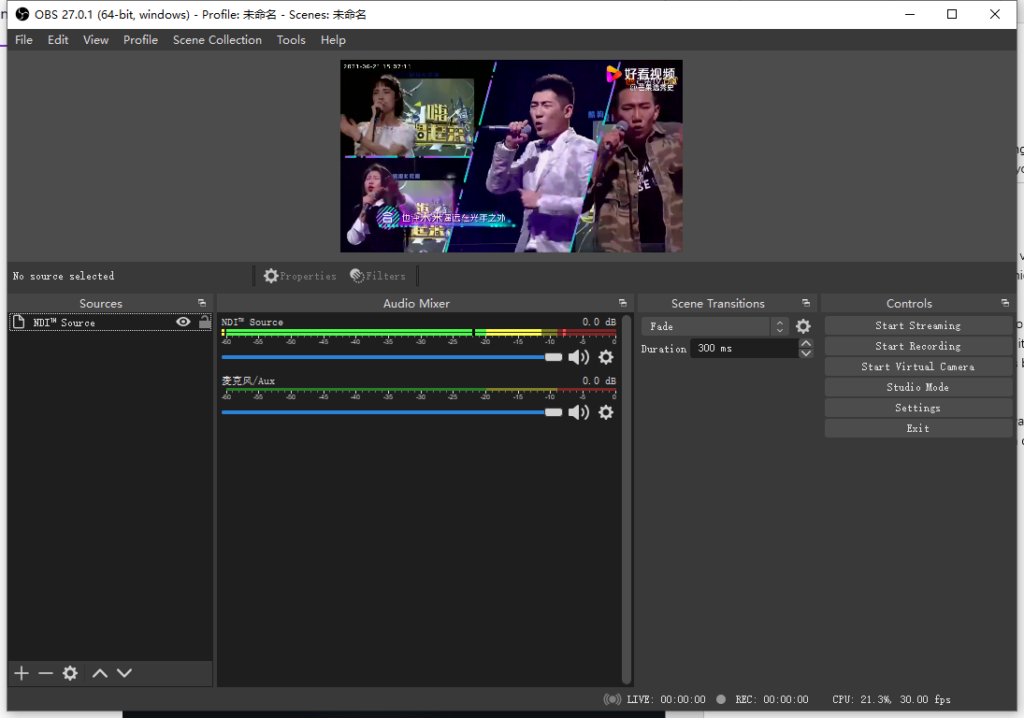
Afterwards installation, we can practice some initial streaming settings for:
- Platform account connection (Twitch, YouTube, Facebook, Restream, Twitter, and so on)
- Video bitrate
- Encoding algorithm (CPU Usage)
- Recording path, quality, format, etc.
- Audio setting
- Video resolution, FPS
- Operation hotkeys
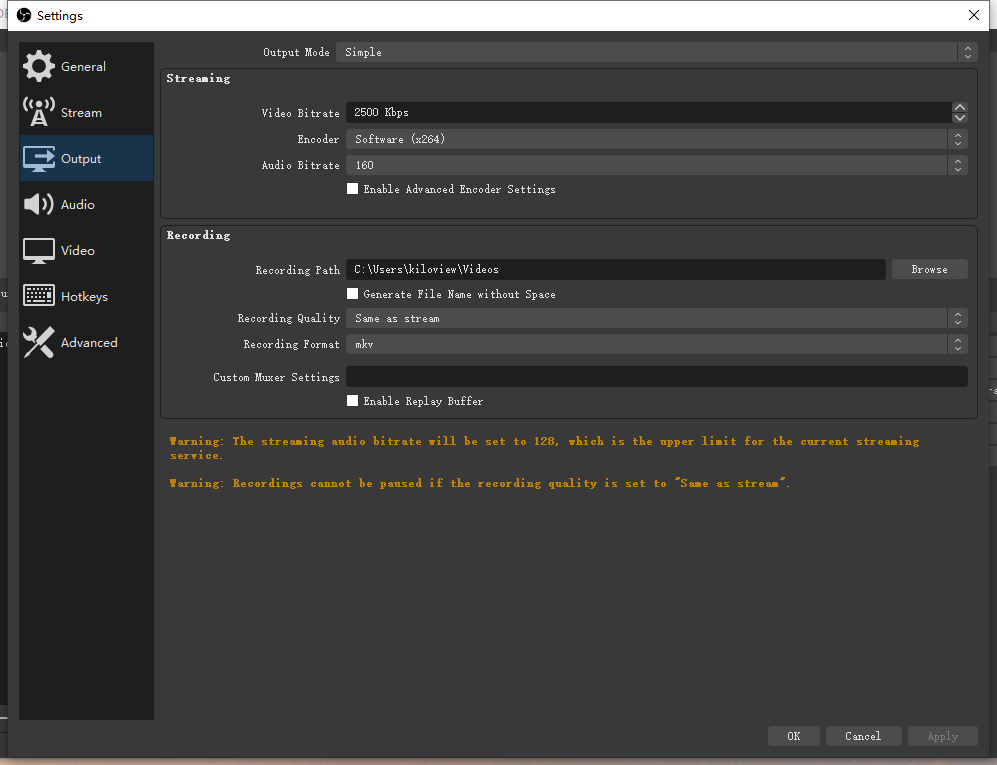
If you are a new user of OBS, and then brand sure to test your stream before it goes live.
4. Patience
Yes, you accept to be patient to tweak all the options or test connections or settings repeatedly until it works well for your multi-platform live program. Sometimes it merely stuck there, and you take to solve those issues that await unique in your example:
- Laggy stream video
- Computer overheating
- Connectedness drops
- App crashes
- Low video quality
If yous are lucky enough to stream successfully for the first time, congratulations, but endeavor to fix them patiently if y'all come across some problems. We have some FAQs at the bottom of this page, which might be helpful for yous also.
As we take installed OBS into our computers, nosotros can straight button the stream to YouTube, Twitch, Facebook, or many other platforms. But the problem is: we can only stream to i platform at one time.
To live our streams on multiple platforms, we will use OBS with other tools. Allow'south dive into these solutions and examples.
Streaming Solution i: OBS (Screen Capture) + Restream
Similar OBS, Restream is another web-based platform for multistreaming. Any registered user tin can use it to push streams to multiple live platforms for complimentary.
The logic is uncomplicated: we push button our single stream from OBS to Restream, which distributes the incoming stream to the selected platforms simultaneously.
Later on registration, we can choose the target platform from the list and connect our streaming accounts to them easily:
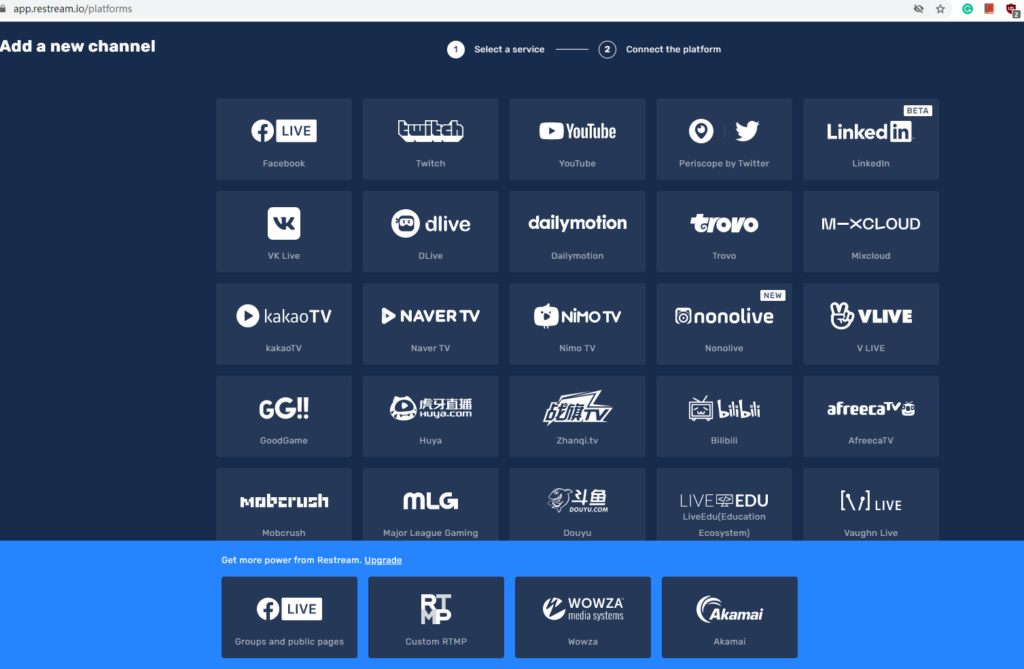
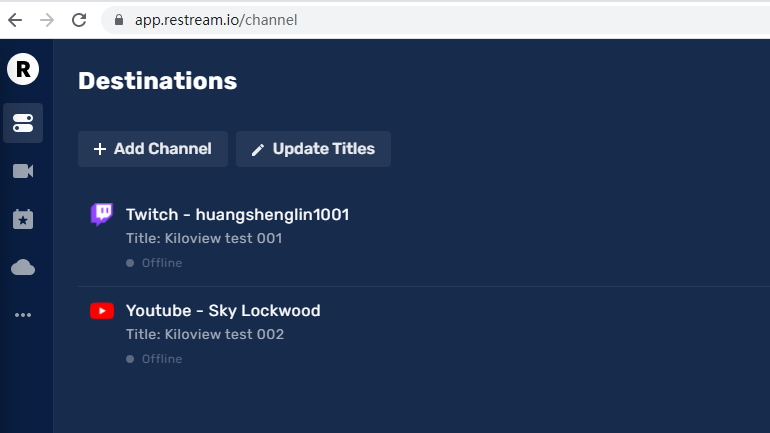
In this example, we have linked our Restream account to Twitch and Youtube by quick dominance:
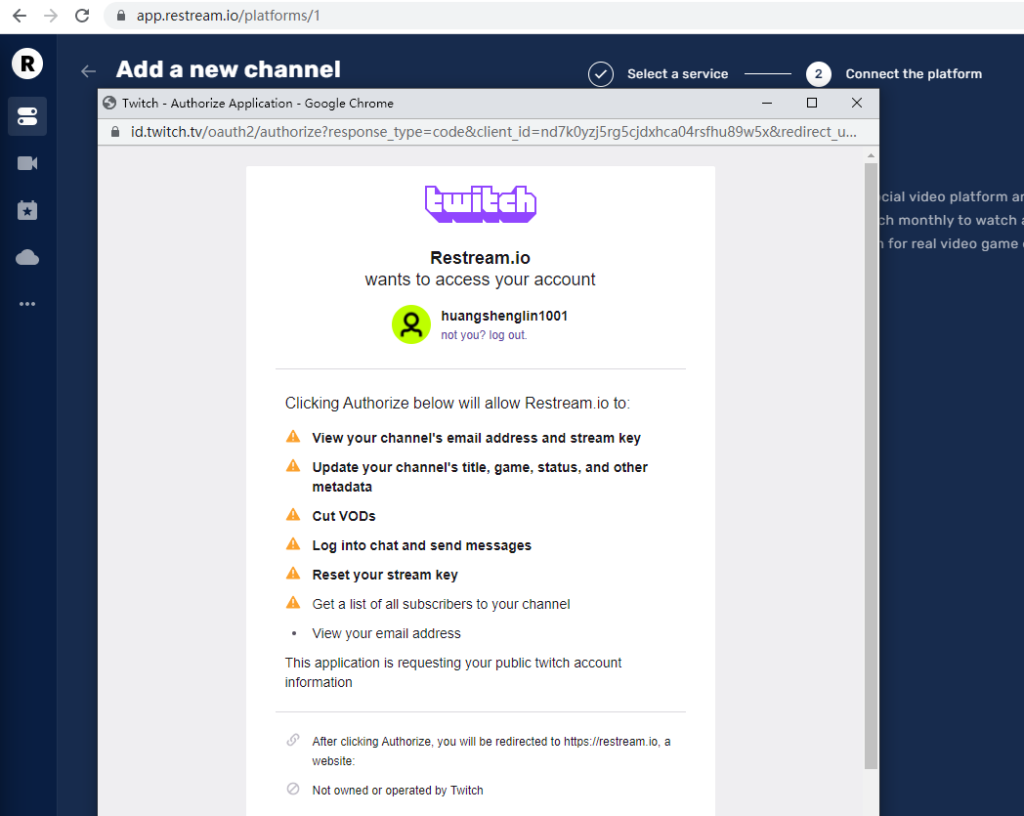
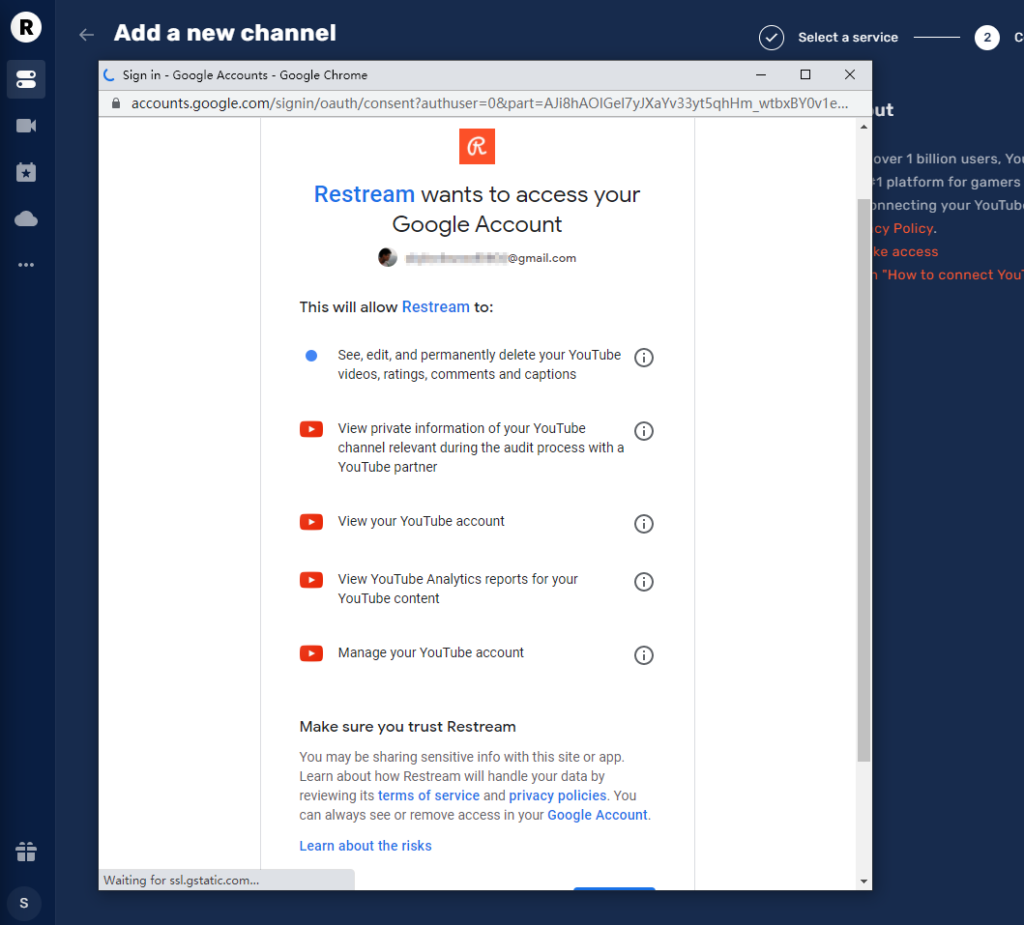
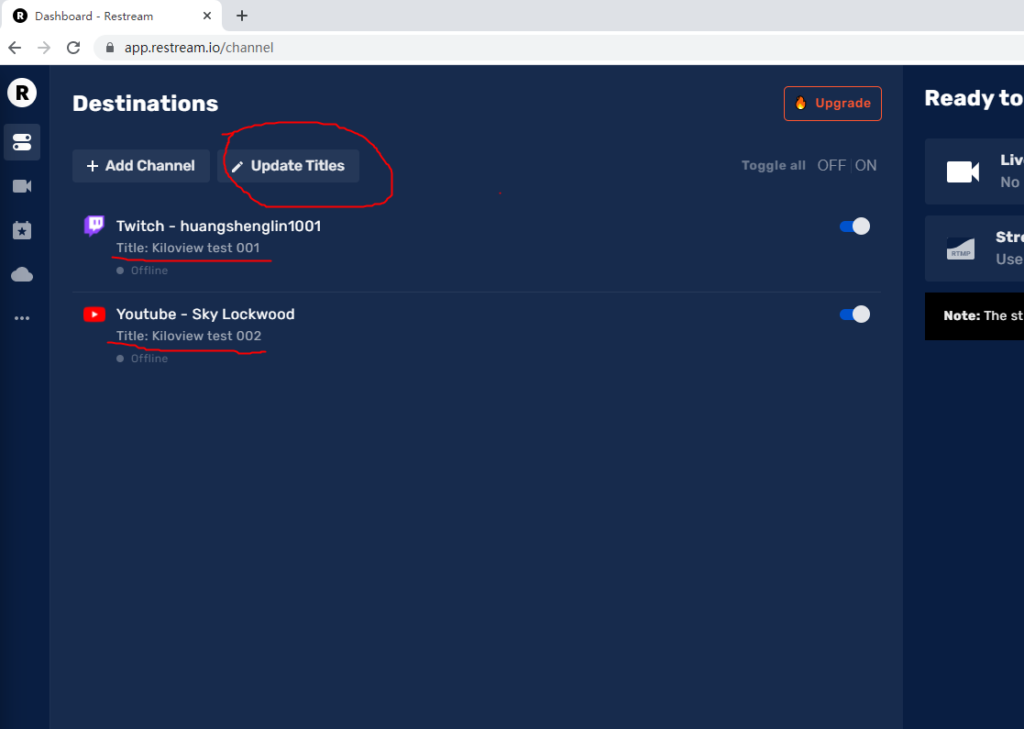
Equally we finished the dominance, the two platforms are displaying on the left side with newly updated streaming titles (which your audiences will see):
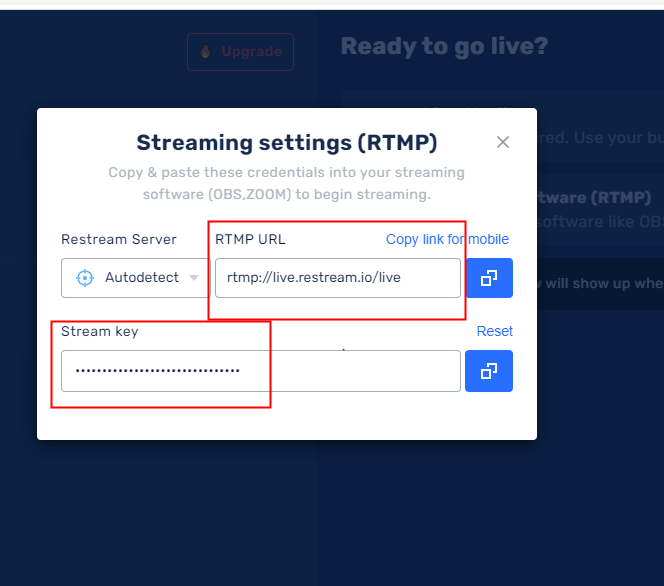
On the right side, we will follow the instruction (as showing below) and finish our OBS connectedness:
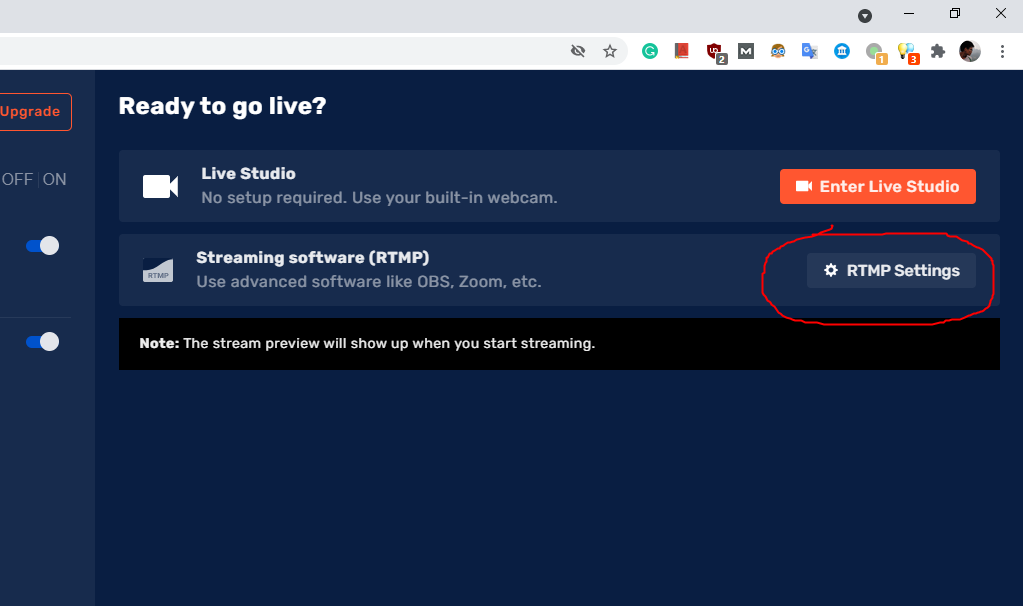
We will use RTMP URL in our OBS, so our video tin get the correct streaming destination: Restream. Likewise, the encrypted stream key is essential for hallmark also.
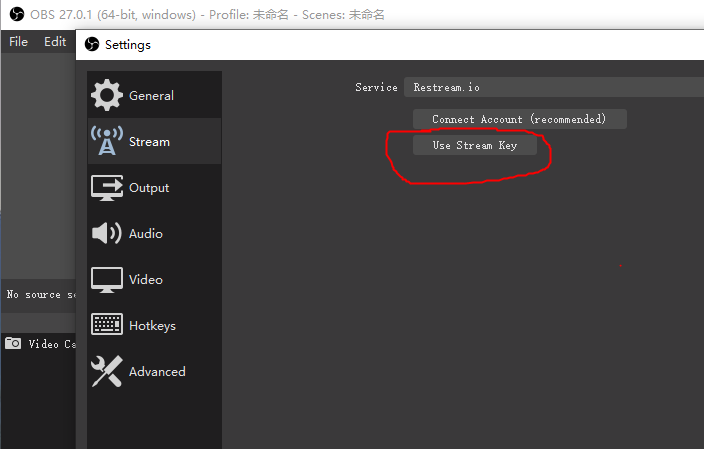
Now, we become to OBS, check "File" -> "Settings" -> "Stream" -> "Service" -> Select "Restream.io" -> "Utilise Stream Primal":
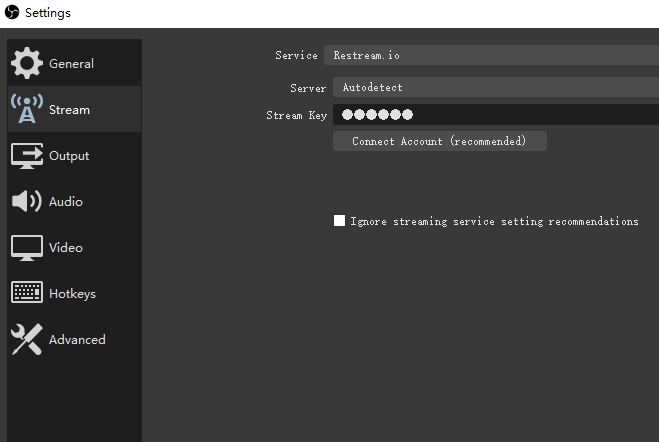
Later on pasting the stream key, hitting the "Apply" button. As Restream is an OBS built-in option, we do not need to requite the RTMP URL manually:
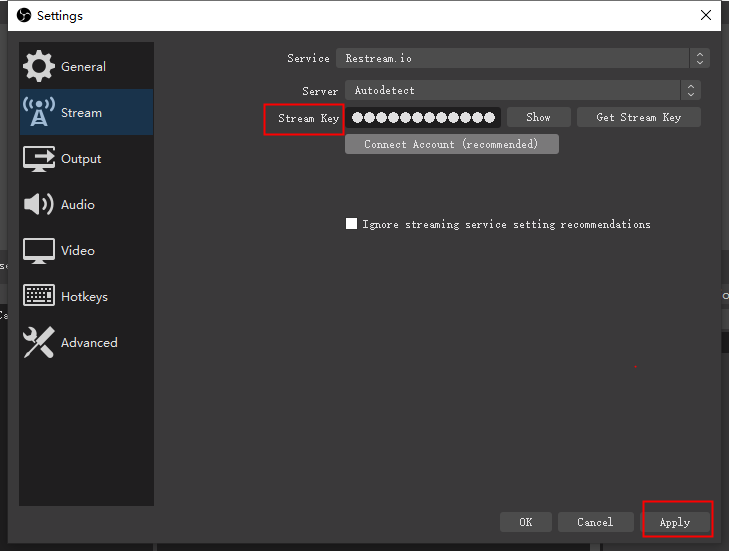
By the way, nosotros can connect our Restream account to OBS instead of using the stream key.
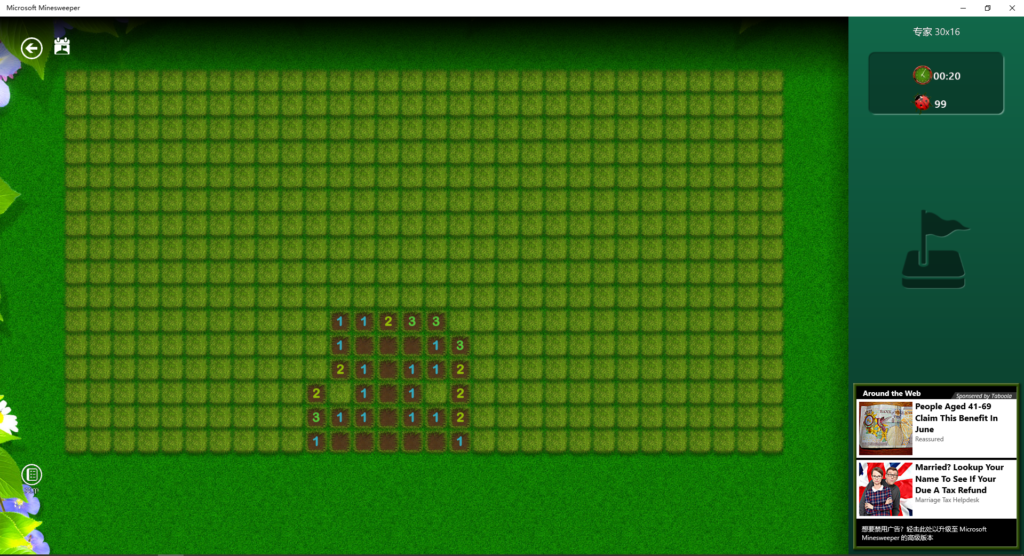
Now let's launch a PC game to test out the stream from OBS to Restream. In this example, nosotros have got Minesweeper:
Now open OBS, on the "Sources" panel, click "+" to add a new video source (if you can notice the panel, so click "View" -> "Docks" -> "Sources"):
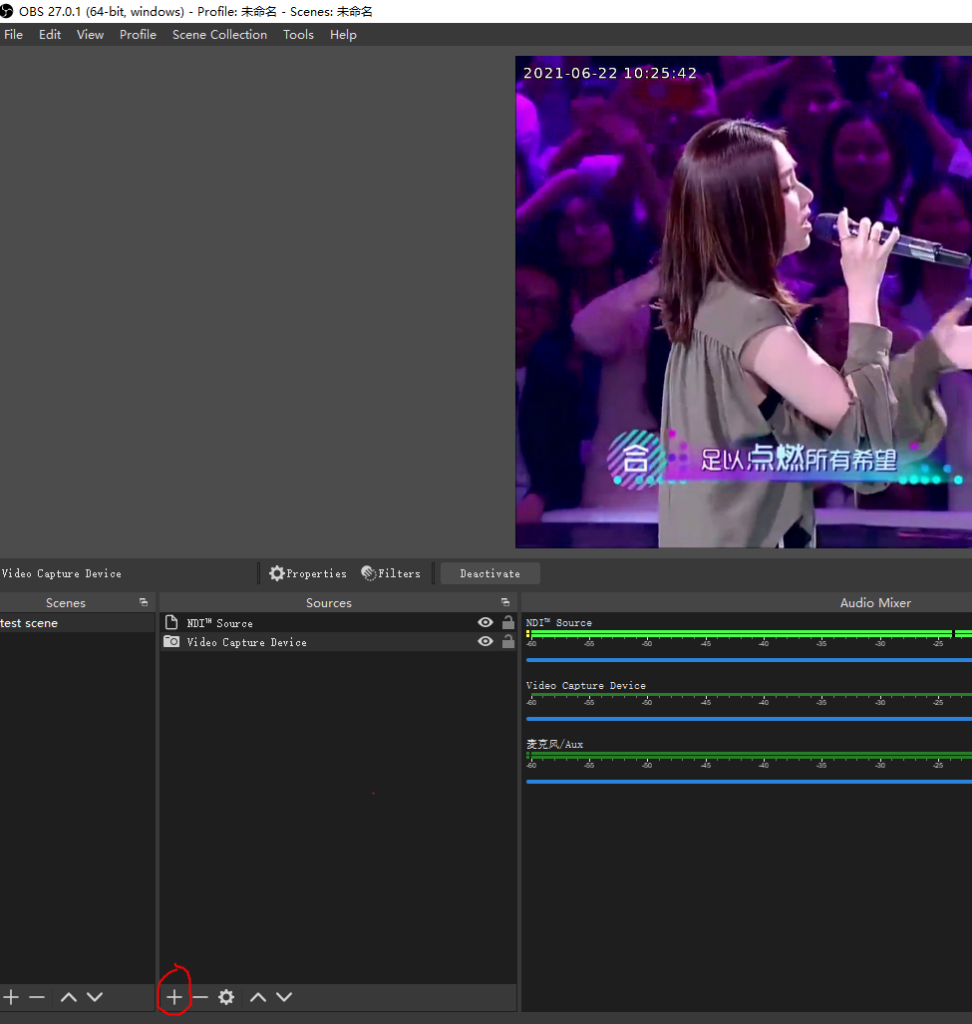
In the popular-up menu, we tin choose either "Game capture" or "Display Capture".
The major difference between these ii options is: Game mode captures every full screen application, while display mode captures everything on your screen.
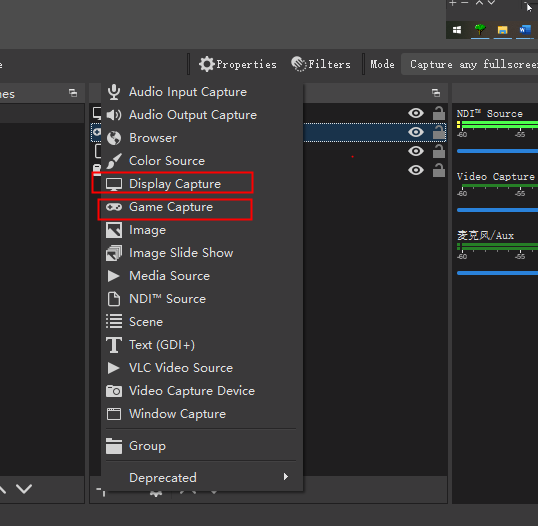
As our game (Minesweeper) can not be displayed on full-screen, we will apply the "Display Capture" as the video source. After we created it, we can double click the option to get more settings:
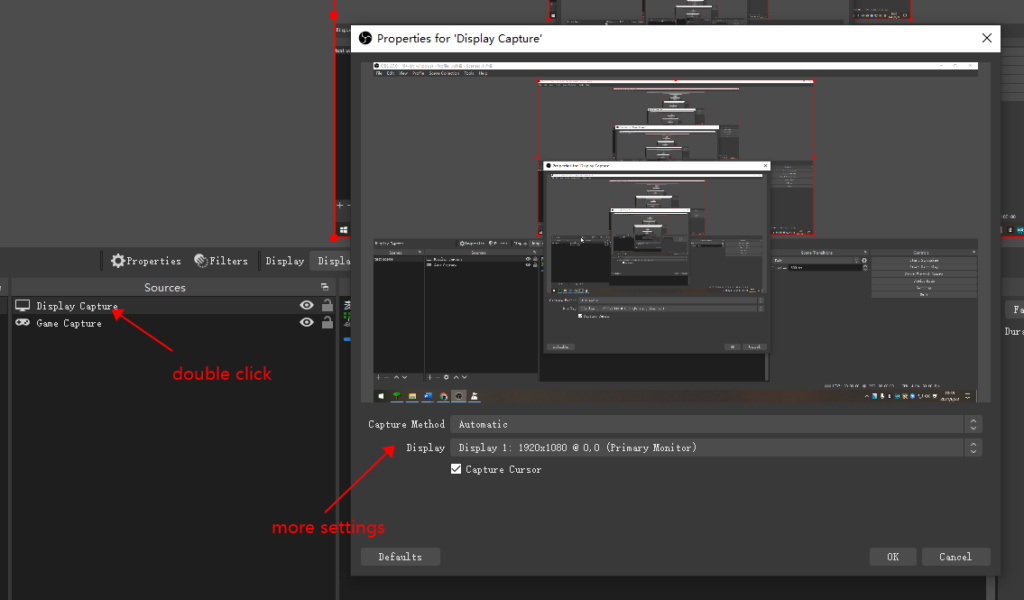
At present we can come across our screen capture is working on the preview surface area.
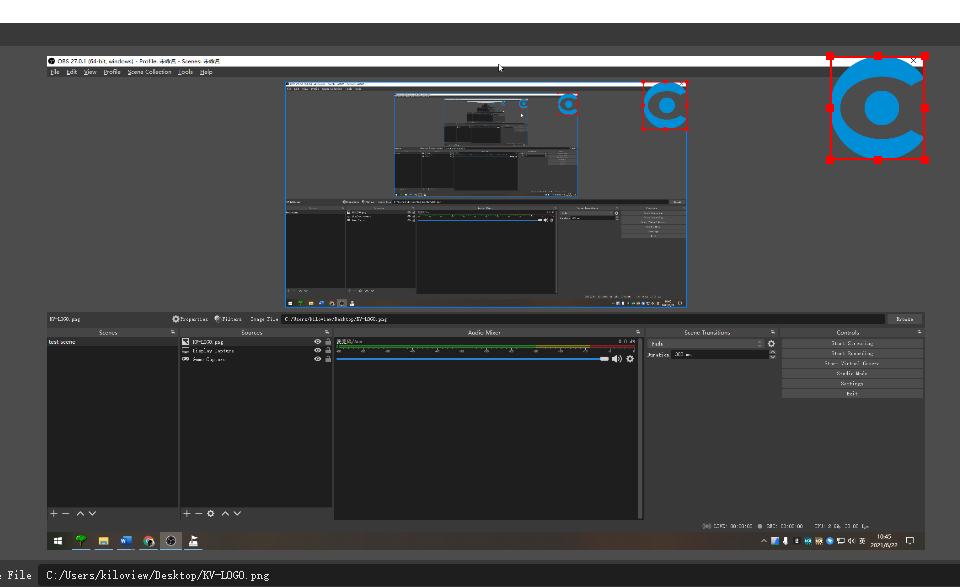
We can choose an overlay picture or more elements for our video stream also. Just add a new source, select "Image", and choose the one we like (we dragged our logo in this instance):
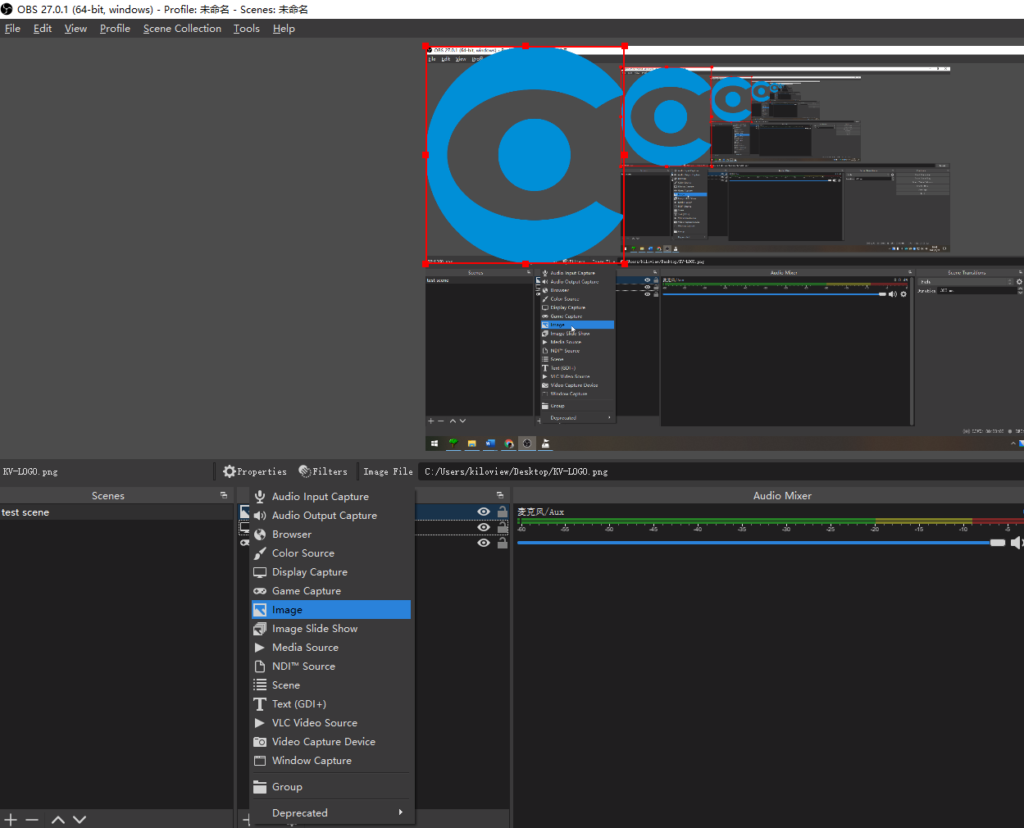
Now we tin can adjust the size and position of the overlay picture freely:
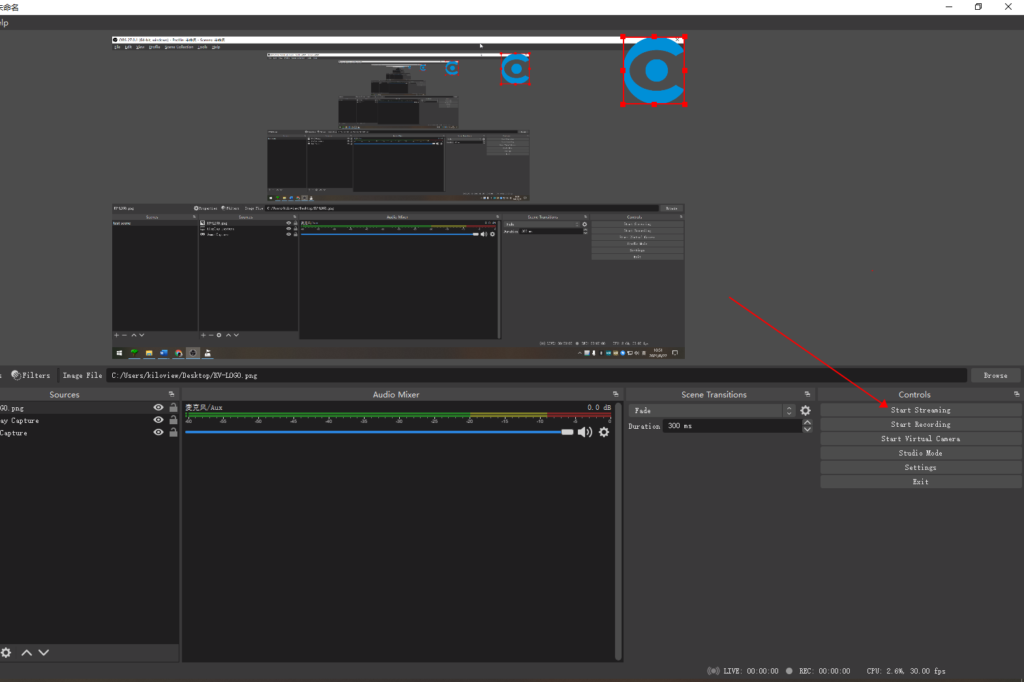
After everything looks good, we striking the push button "Start Streaming" to go alive:
Now back to Restream, nosotros can see everything is on the go:
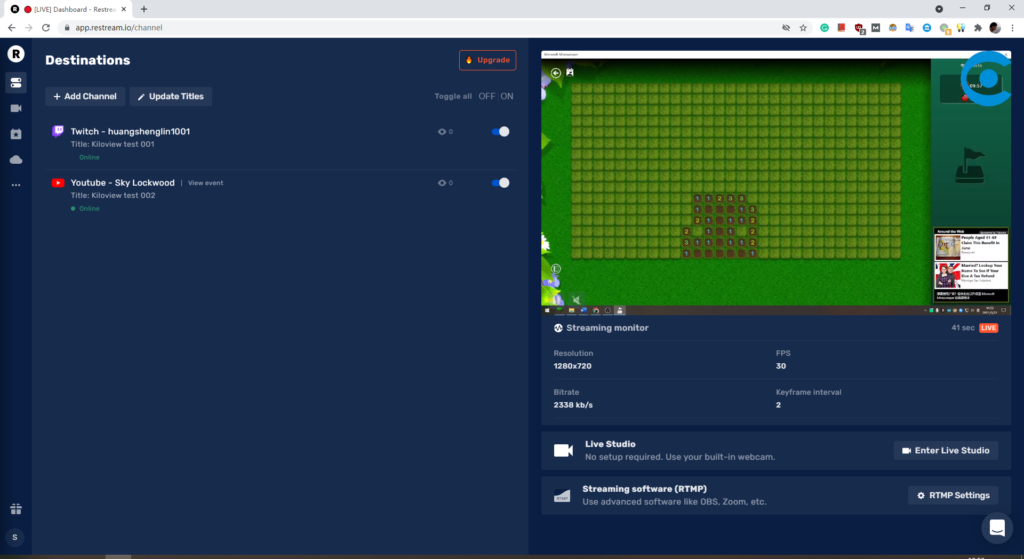
Our game goes live now, and the viewers tin can bask the live stream both on YouTube and Twitch.
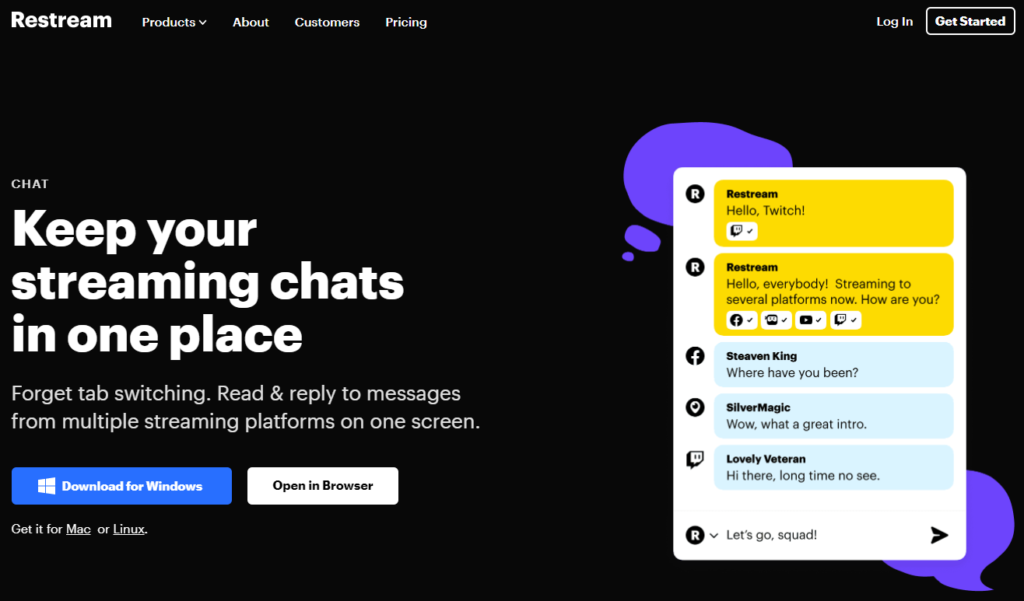
How virtually chatting with your audiences from different platforms? Download the official chat App to talk to them in one place:
Streaming Solution 2: OBS (Screen Capture) + Multi-RTMP Plugin
Restream is good plenty for multi-platform streaming, only you may wonder if there is an integrated solution for doing everything but inside OBS. Here comes our "Multi-RTMP" plugin:
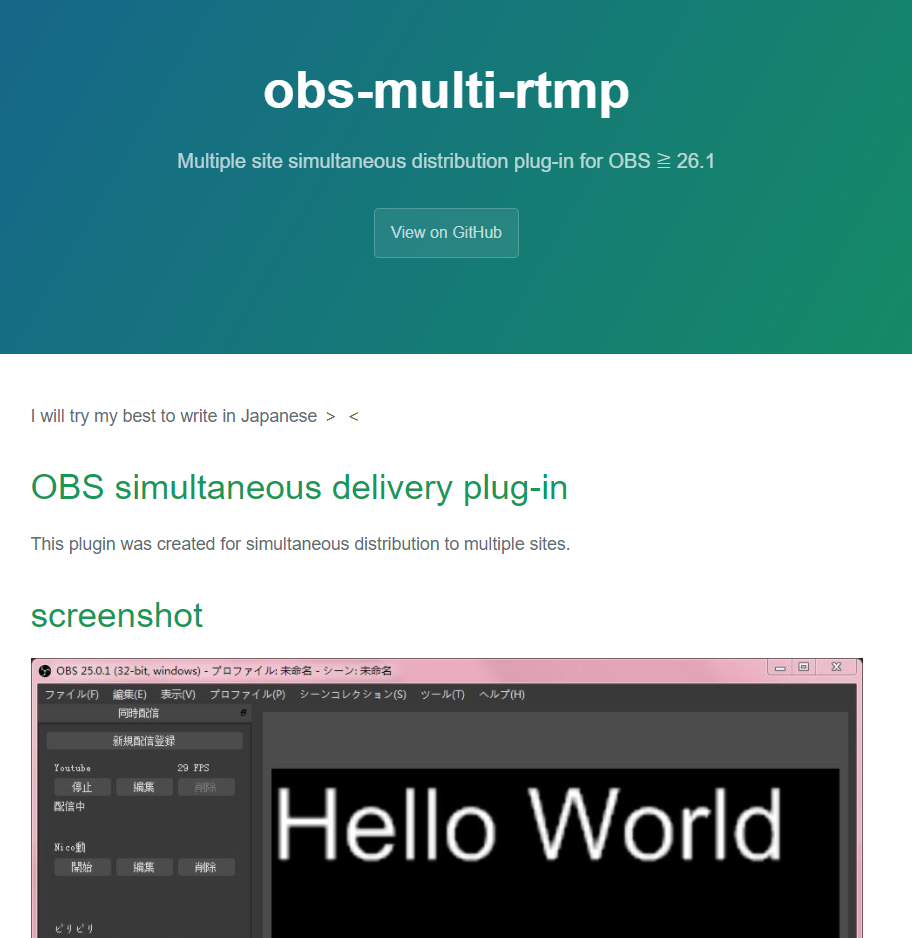
Information technology is an open-source plugin for installing on OBS. When installed, we can push our stream to different live platforms using OBS.
To begin with, let'southward go to the Github folio of Multi-RTMP hither, and click on the releases console to download the plugin file:
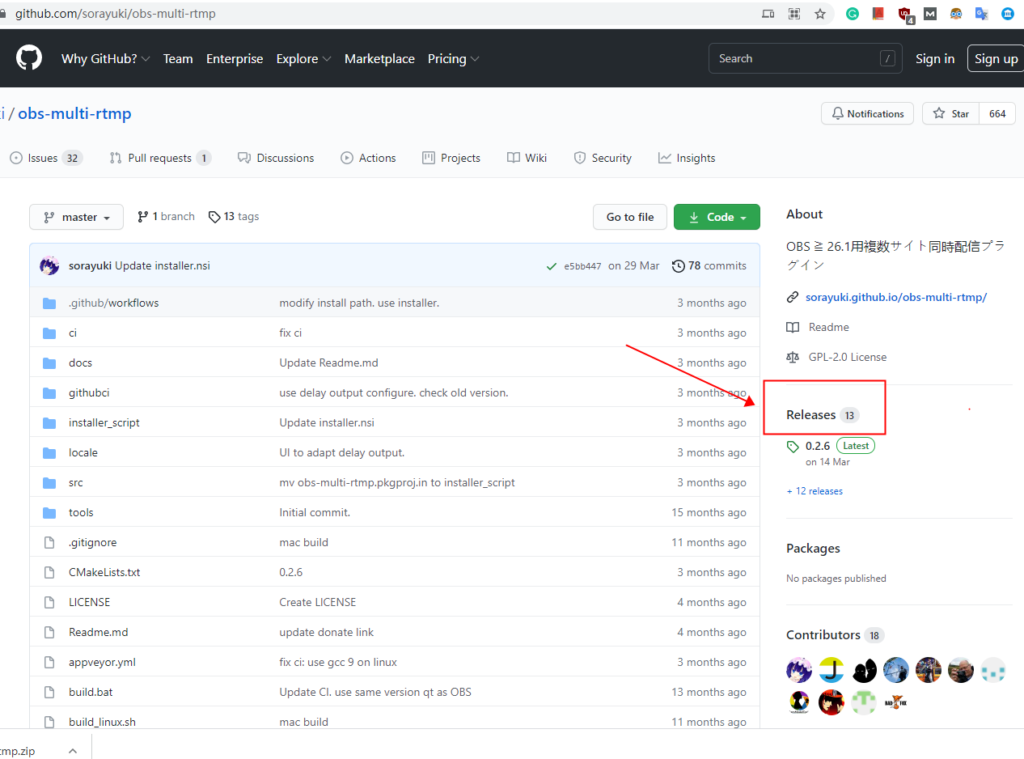
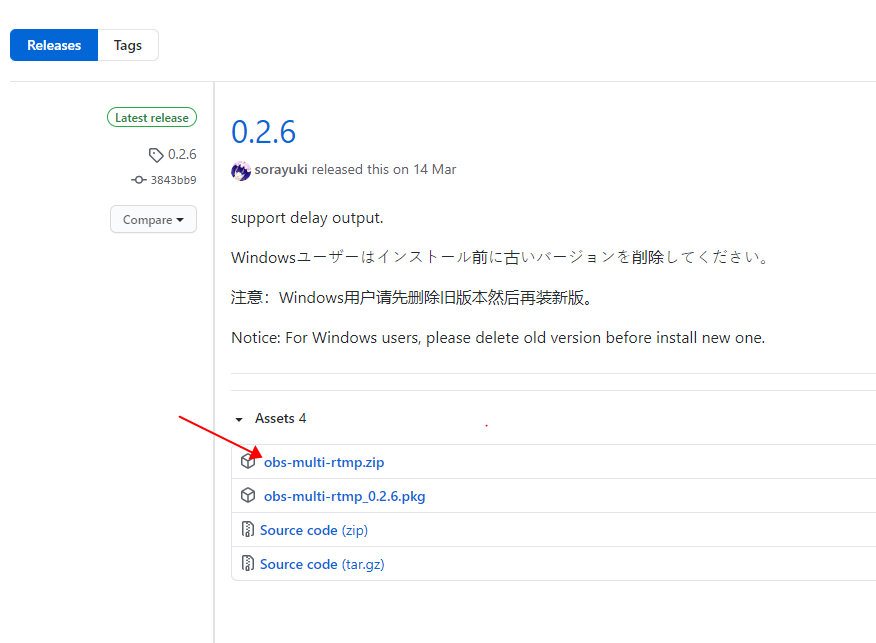
When finished download, we volition click on the "obs-multi-rtmp-setup.exe" (Windows user) extracted from the zip file and run it. Recall not to modify the default target binder: "C:\ProgramData\obs-studio\plugins\obs-multi-rtmp".
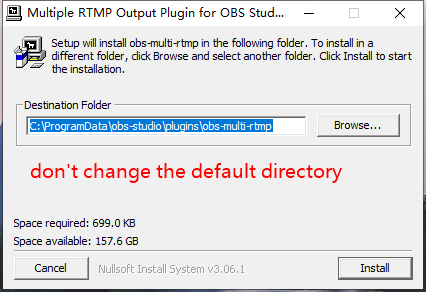
Afterwards installation and restarting OBS, yous will find the "Multiple output" tab on the left side (if it doesn't appear, cheque "View" -> "Docks" -> "Multiple output"):
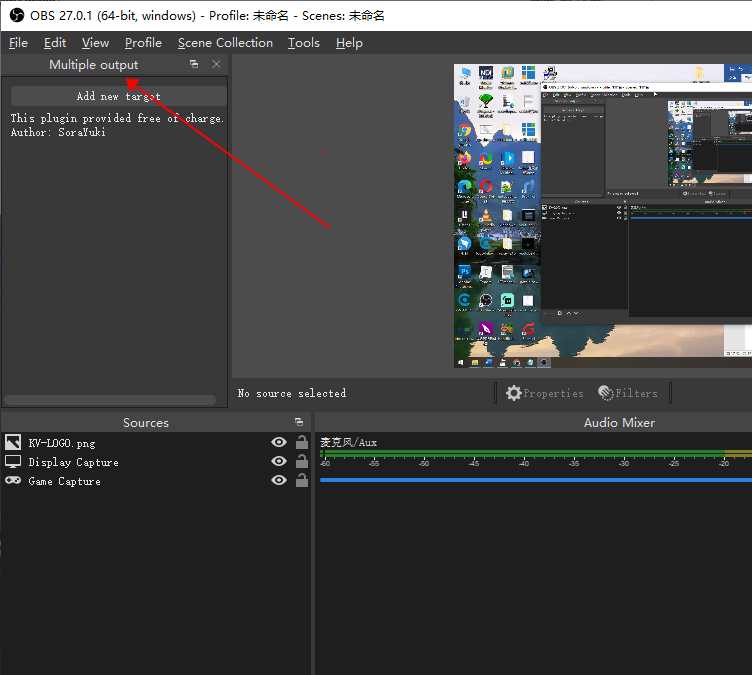
At present let's add our platforms (Youtube and Twitch) by clicking the "Add together new target" push button within the plugin panel:
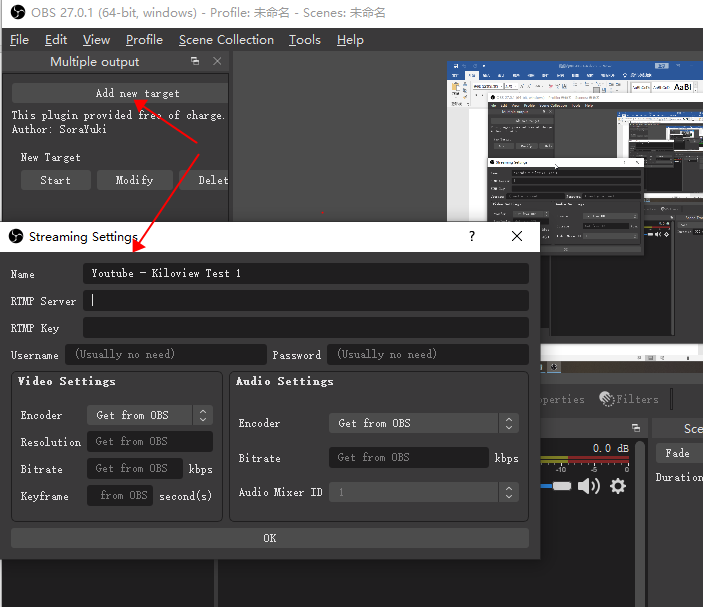
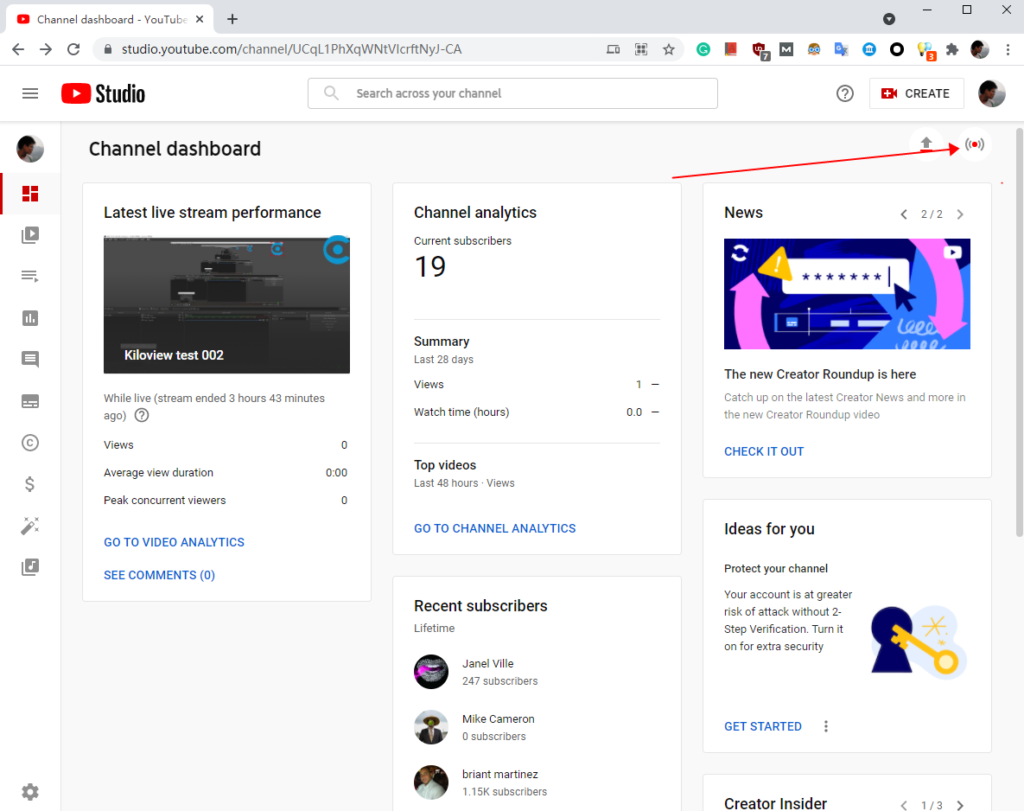
Then we will find the RTMP Server address and RTMP Key for our streaming platform (YouTube in this case). To exercise this, let's go to Youtube Studio (https://studio.youtube.com/), and click on the "Go live" icon:
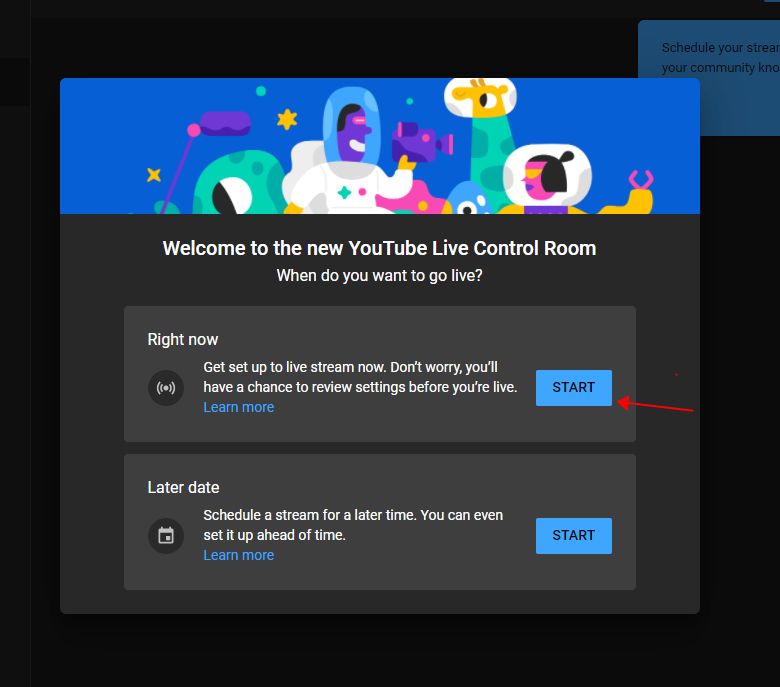
Now we check "Commencement" on "Right now" pick and choose "Streaming software" on the following menu:
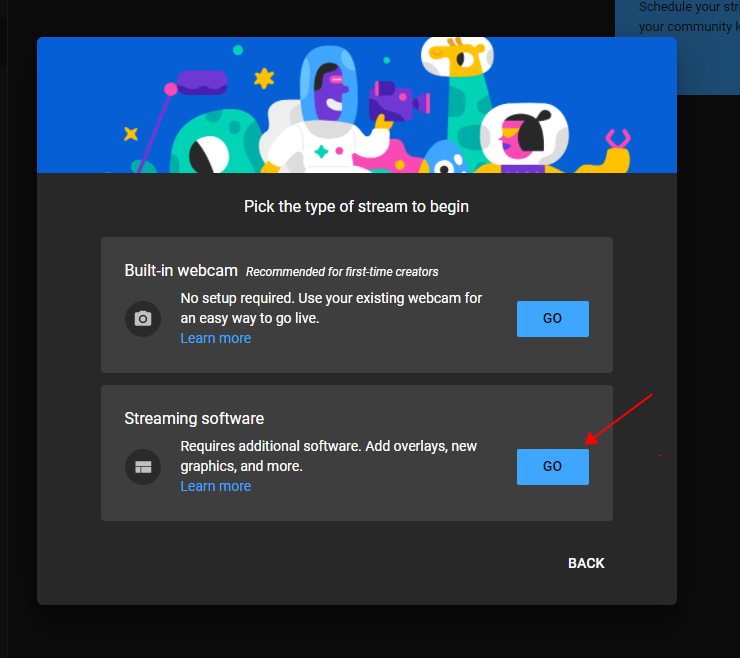
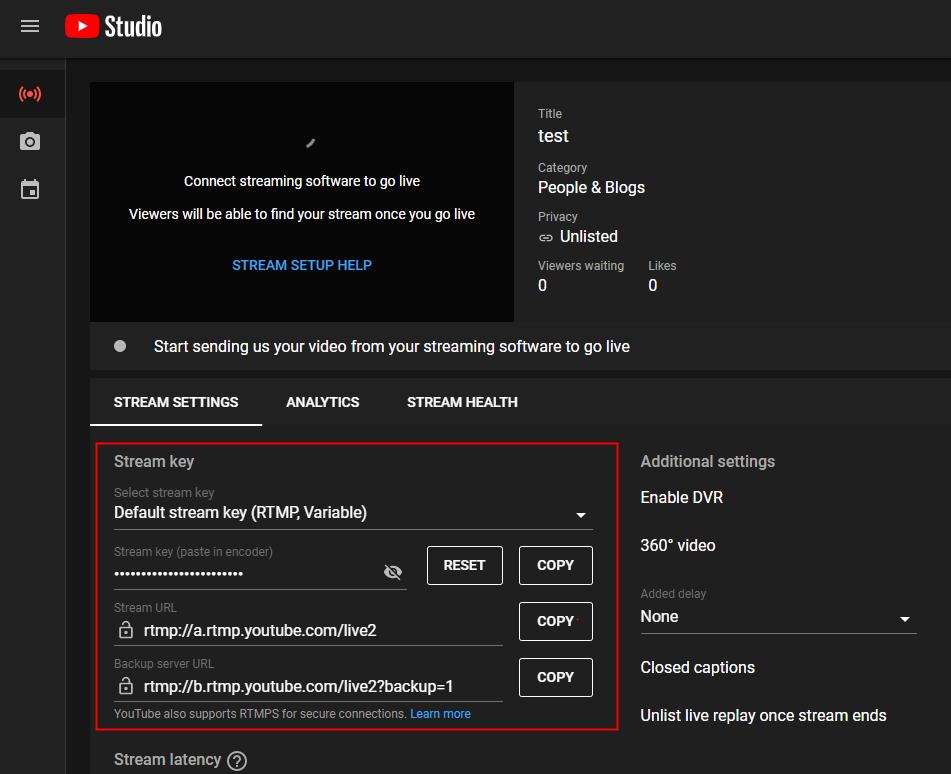
Now we re-create the URL and stream key to the OBS plugin panel and click "OK" (leaving the other options every bit default):
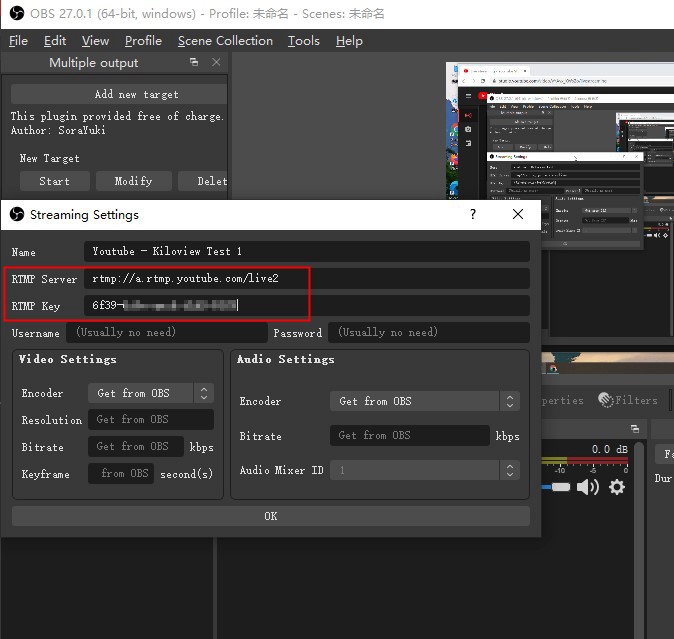
At present allow's connect another platform, taking Twitch as an example:
First, get to https://dashboard.twitch.television set/settings/stream. In one case login, y'all will exist redirected to the streaming setting detail, including your stream fundamental:
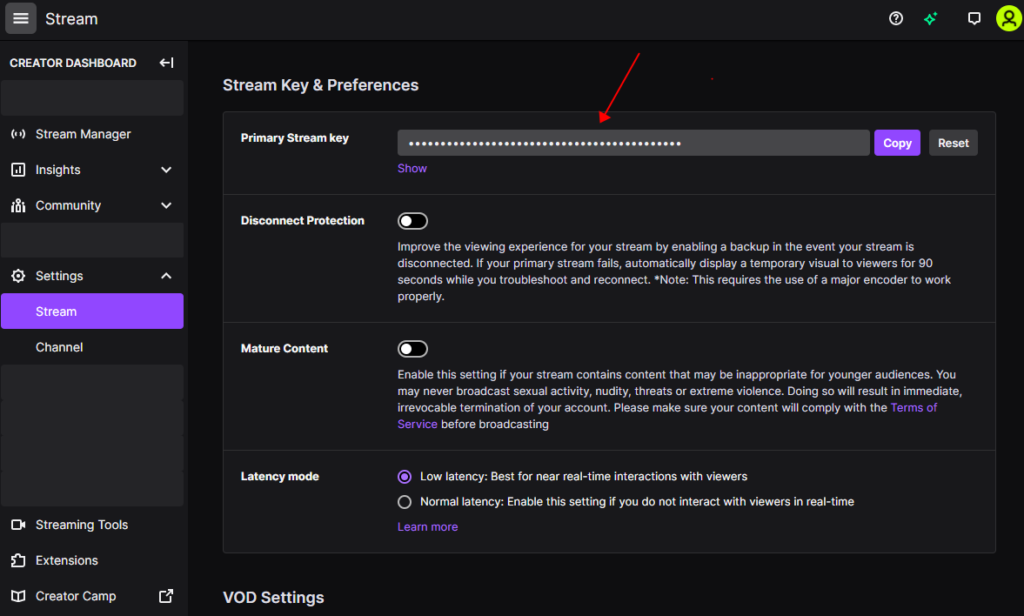
We need to go to the Twitch Streaming RTMP URL: https://stream.twitch.tv/ingests/, and it will automobile-suggest some servers according to our location. All we need to do at present is to copy any of the recommended URLs (be careful not to encompass the variable later the tailing slash):
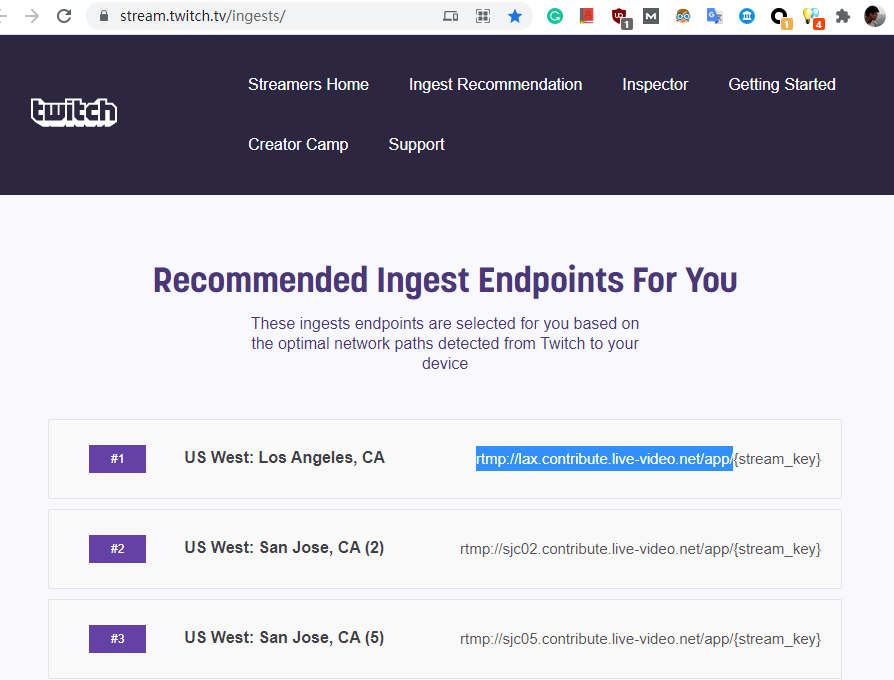
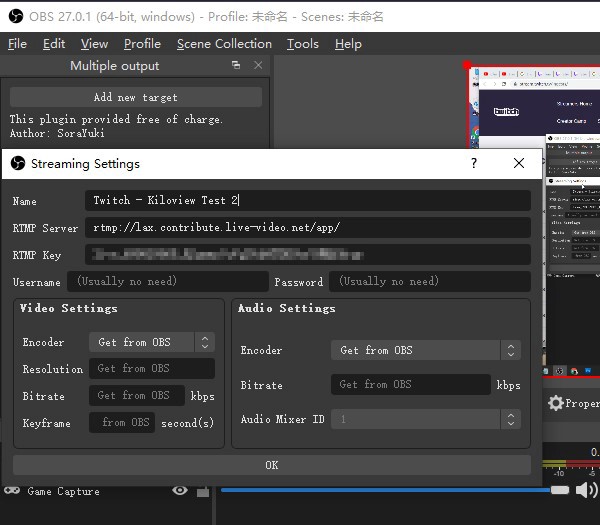
When we finished copying the RTMP server and RTMP key into the OBS plugin panel, click OK.
But like before, our video will go live both on Youtube and on Twitch if nosotros click the push button "start streaming" on OBS.
Streaming Solution 3: OBS (Screen Capture) + Self-host Server + FFmpeg Directives
When we stream to Youtube, Twitch, Facebook, or Restream, we are pushing our videos to their RTMP servers. How about put our stream to our own server and then distribute it across those platforms?
Here nosotros can establish an RTMP server on our computer and stream via FFmpeg directives from our computer.
In that location are three essential tools we need for this:
- MonaServer. MonaServer is a free and portable RTMP server that can run on our computers (so nosotros volition send our stream to it from OBS). The compiled exe file tin be downloaded here;
- VLC Media Player. The player is used to exam our local stream video. Any apps that play RTMP stream will fit. You can download VLC on their official website here;
- FFmpeg. FFmpeg is a free and powerful tool to resend our stream from our local RTMP server to last destinations (Youtube, Facebook, Twitch, and so on). Yous can download FFmpeg on their official website here;
When finished downloading, make certain the extracted FFmpeg exe files (ffmpeg.exe, ffplay.exe, and ffprobe.exe) are moved to the root directory of MonaServer, so the working directory looks like this:
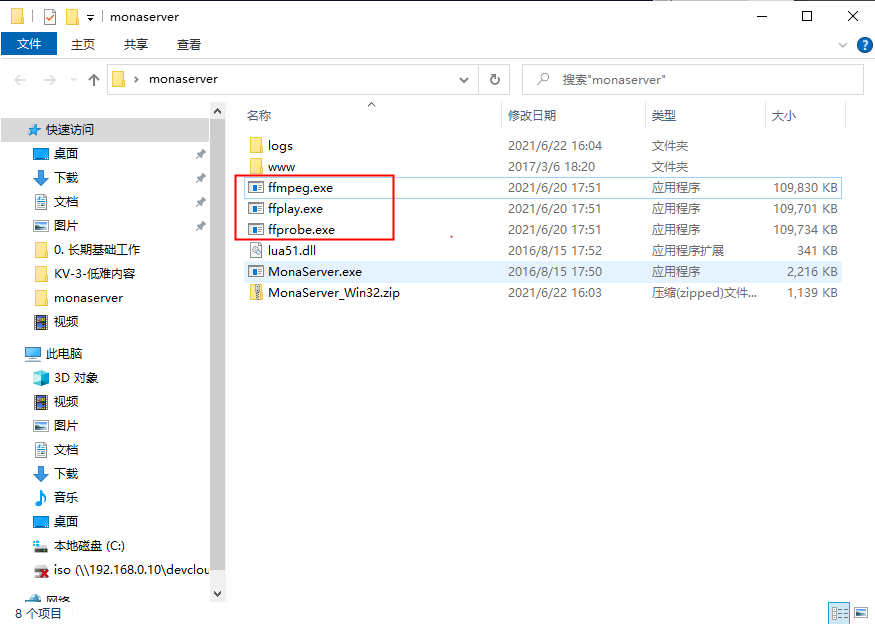
Now let'south beginning our streaming journey.
Starting time, open MonaServer directory, hold the "Shift" fundamental, and right-click on the blank surface area, cull "open PowerShell window hither":
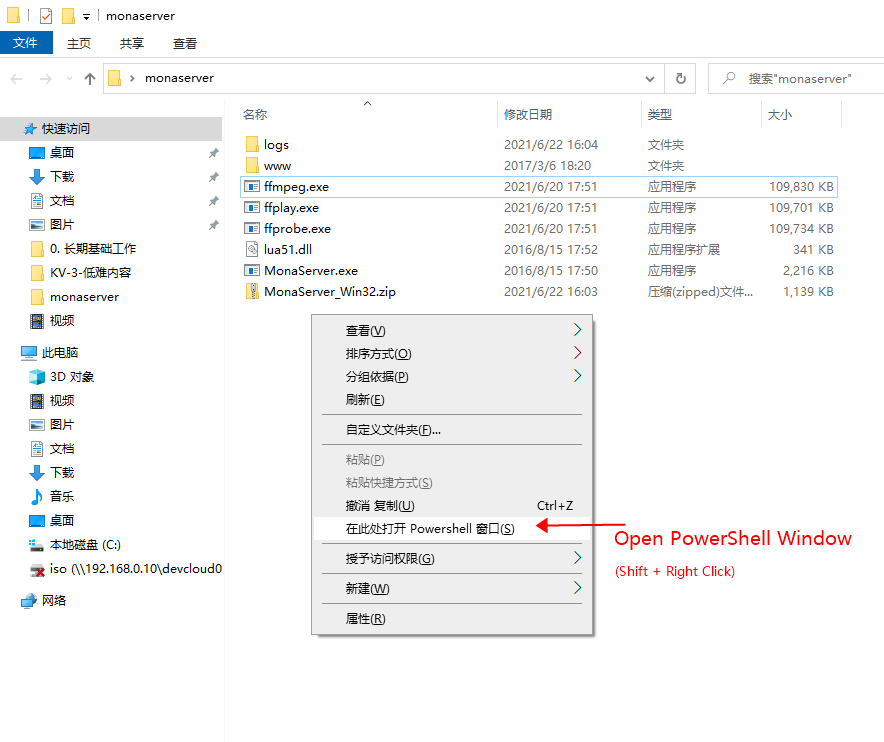
When the Windows PowerShell poops out, input ".\MonaServer.exe", printing enter, then you will find the server running info:
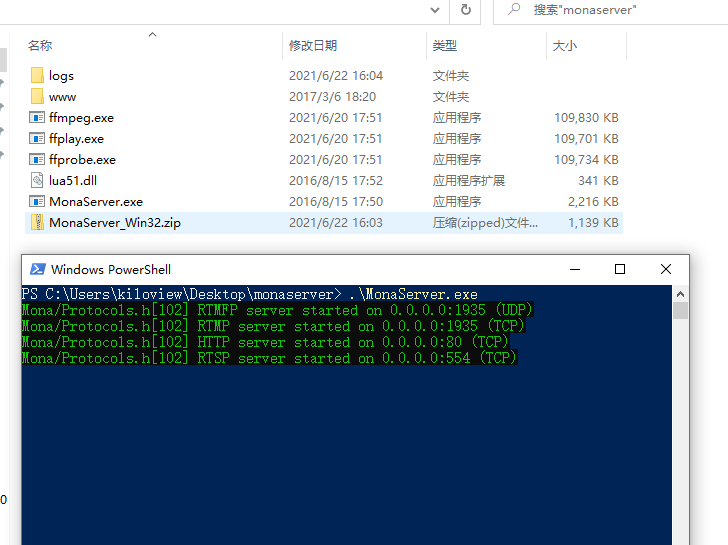
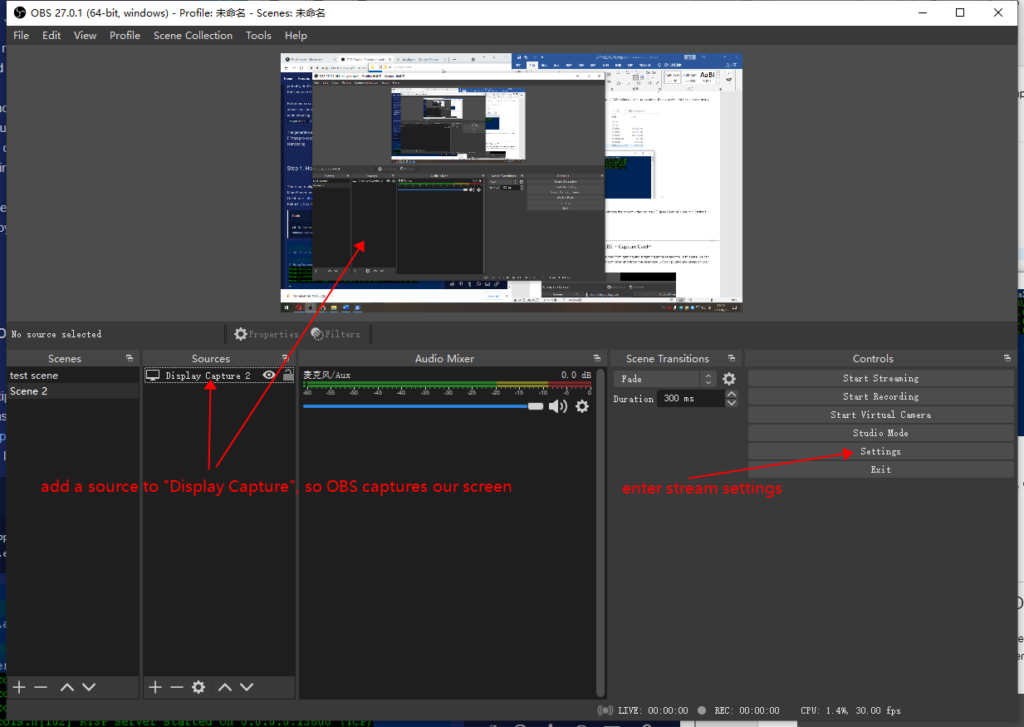
As the service is running, now we go to OBS, choose the right video source ("Display Capture"), and hitting "Settings":
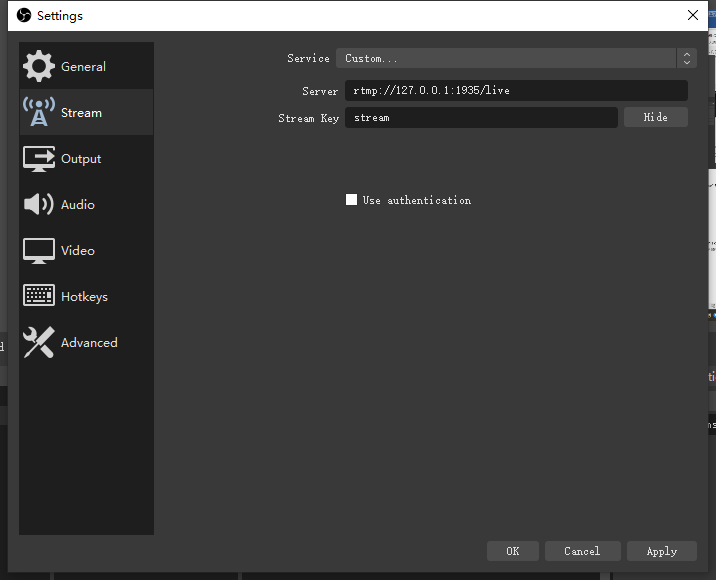
Go to the "Stream" panel, choose "Custom" under "Service" pick, and input "rtmp://127.0.0.one:1935/alive" for our local MonaServer address, and "stream" for the stream key, then apply:
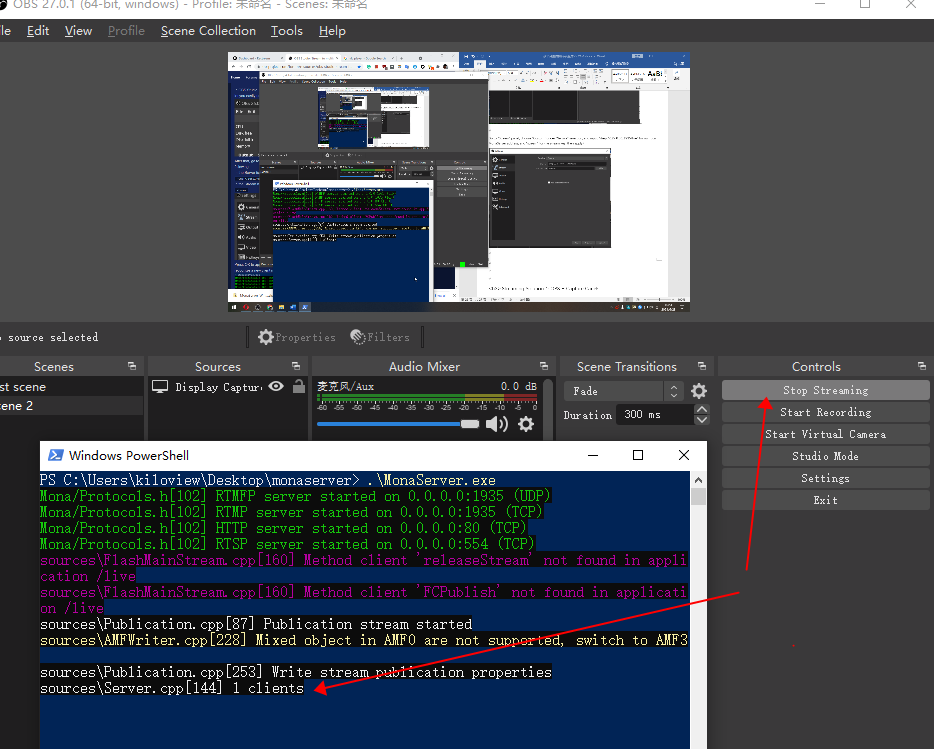
Now back to OBS, hitting the "Outset Streaming". We will come across the condition in the PowerShell changed immediately, which tells usa it's getting the stream from some client (simply ignore the error info):
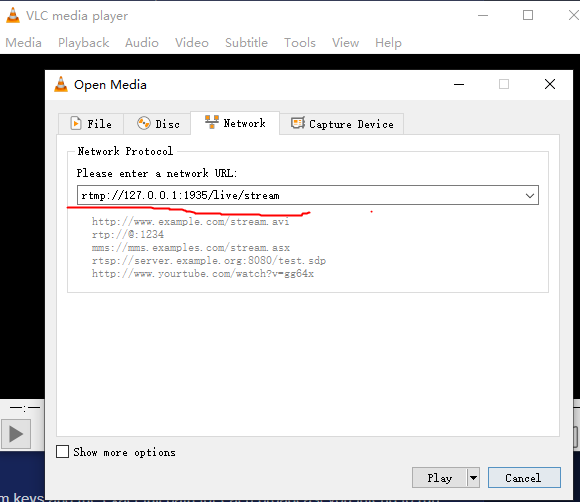
Now our local server is working properly on the live stream. To test it, open up the VLC Media Role player, press "Ctrl + N" to open a network stream, and put our local stream URL (rtmp://127.0.0.one:1935/live/stream) to it:
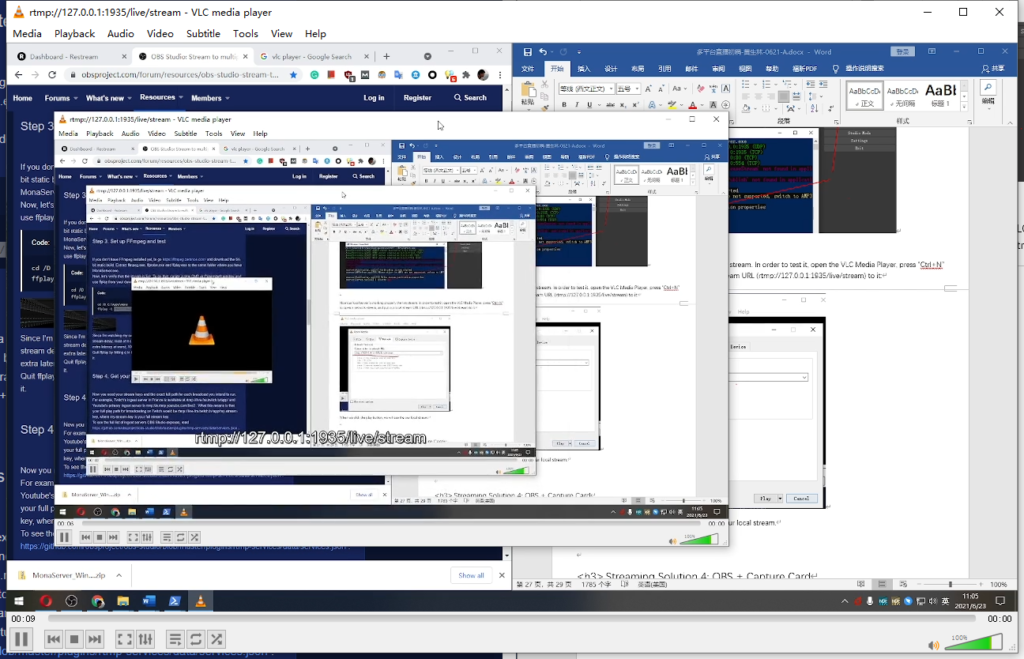
When nosotros click the play button, nosotros volition meet our local stream:
Next, we will put our local stream to more Internet platforms such as YouTube and Twitch via FFmpeg. Let's go back to the local server directory and open another PowerShell window from in that location by Shift + Correct Click.
Nosotros volition put our local stream to a unmarried platform to test beginning. Allow'southward input the following code into the new PowerShell console:
ffmpeg -i rtmp://127.0.0.1:1935/live/stream -c:v copy -c:a copy -f flv rtmp://hkg.contribute.live-video.net/app/{stream_key} Remember to put your RTMP URL and stream central in the PowerShell:
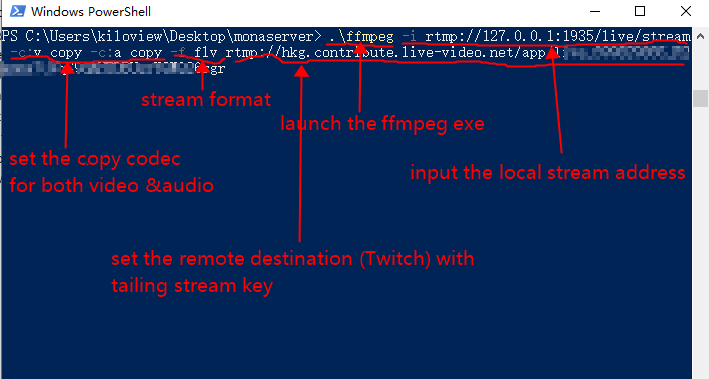
If you accept bug getting your streaming URL (remote destination RTMP URL accost) and stream key, please refer to relevant content in our streaming solution 2 in a higher place.
When we striking enter, the console starts working, and we will see our streaming status in the Twitch spider web console:
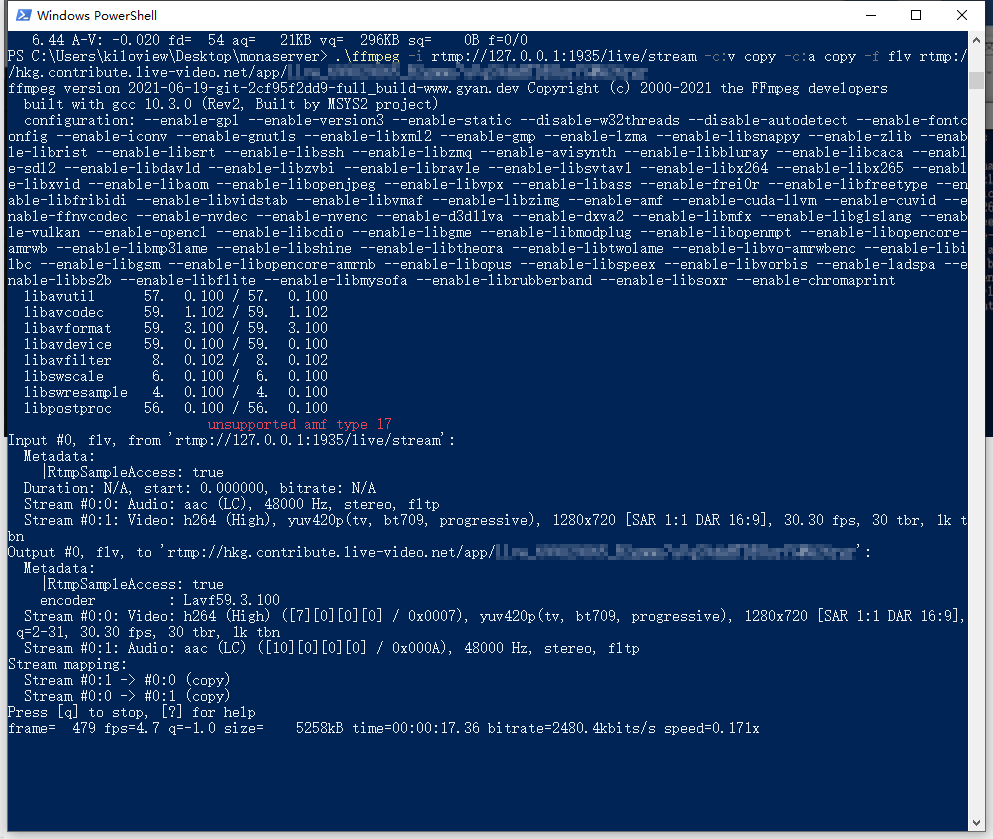
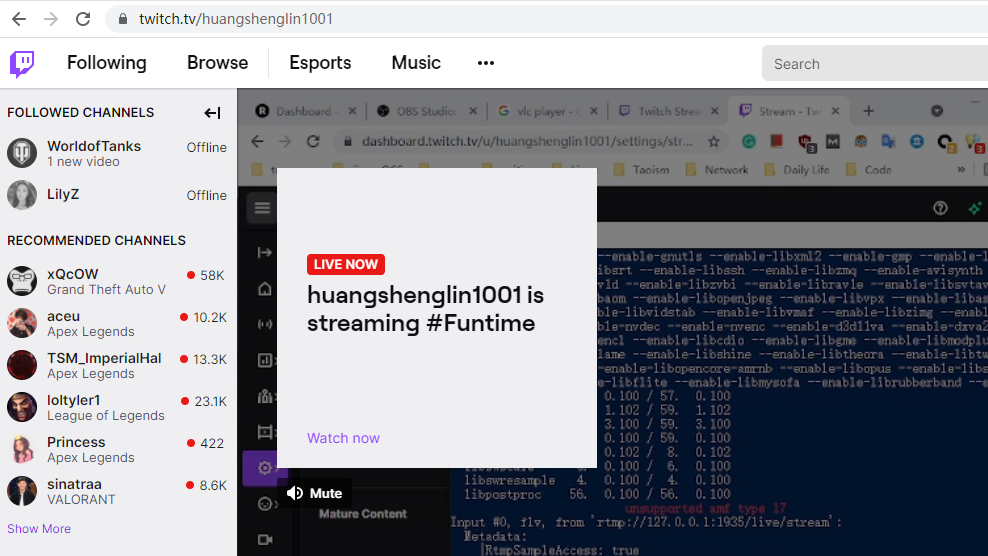
Now permit'south use the FFmpeg directive to stream our video to Youtube and Twitch (and any other platforms) at the same time.
Open some other PowerShell window from the MonaServer directory, and type the following code:
ffmpeg -i rtmp://127.0.0.1:1935/live/stream -c:five copy -c:a re-create -map 0 -f tee "[f=flv]rtmp://hkg.contribute.alive-video.cyberspace/app/{stream_key}|[f=flv]rtmp://a.rtmp.youtube.com/live2/{stream_key}" exchange the above RTMP URLs and streams key with your own and you lot will get the local stream over ii platforms.
For more useful examples or performance references, you tin can find here on the OBS official platform.
Streaming Solution 4: OBS + Capture Card
Sometimes your computer is getting overwhelmed from gaming and streaming at the aforementioned fourth dimension. In this example, nosotros can use a video capture card installed on another computer and cease the streaming without putting any stress on your gaming PC.
In the post-obit example, we volition use 2 computers:
- Computer A: Streaming PC, OBS and capture carte hardware installed
- Computer B: Gaming PC, outputting game video to computer A as media source
In Calculator A, nosotros volition add a new source to "Video Capture Device" on OBS and select our capture card:
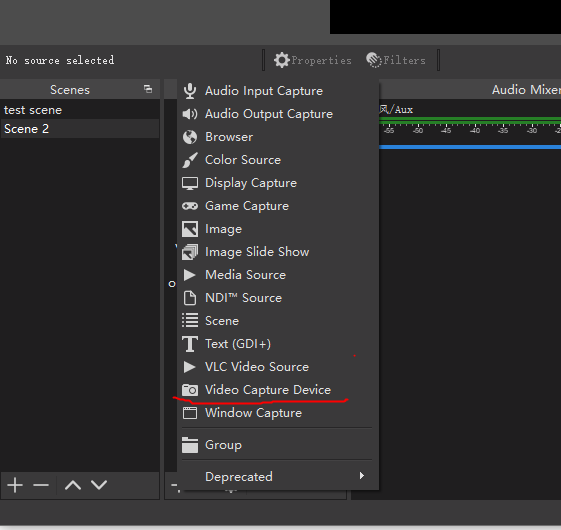
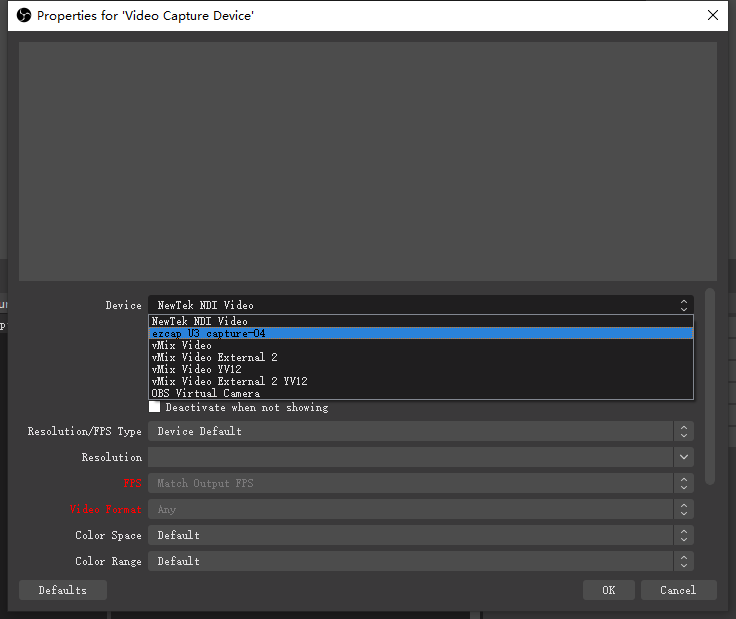
Once targeted our capture device, the gaming video appears automatically on the preview window:
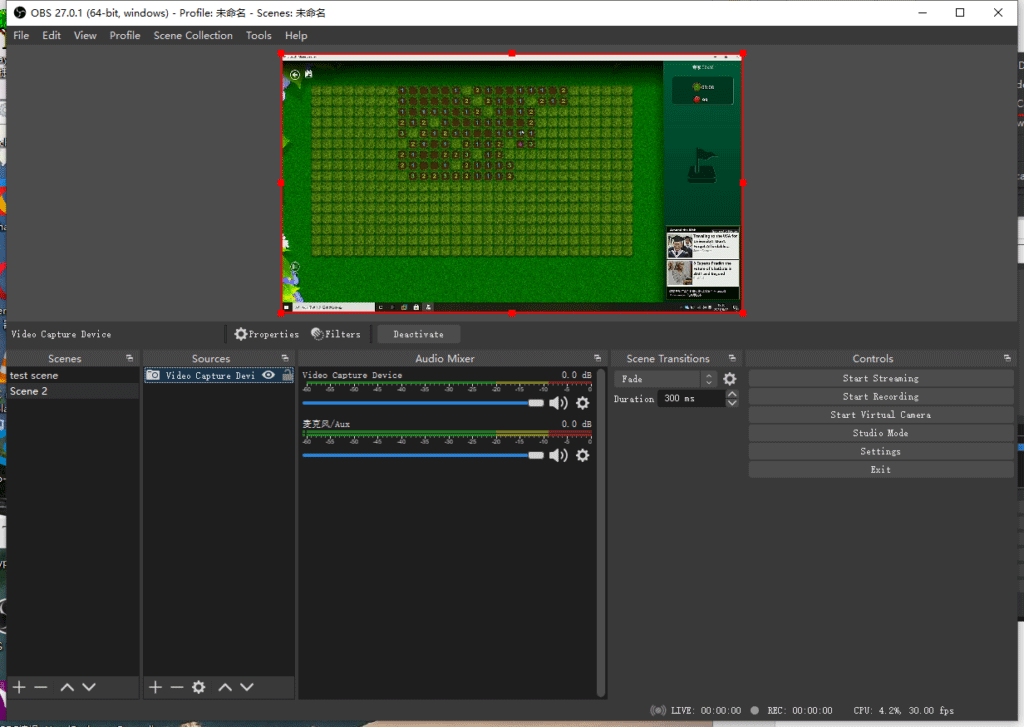
Next, we will stream to Restream.io or Multi-RTMP plugin to finish the multi-platform distribution, merely every bit we covered above.
Streaming Solution v: OBS (External Video Source) + NDI
Take a deadening computer and no upkeep for capture device? No worry, nosotros can collect the video source via some free capture Apps (for case, NDI Screen Capture).
NDI is a professional person video transmission protocol launched by NewTek, which empowers us to autodetect video sources across the local network (e.g., other estimator's screen capture). In other words, NDI works as a perfect virtual capture menu.
To begin with, let's download the NDI tools from the official website here:
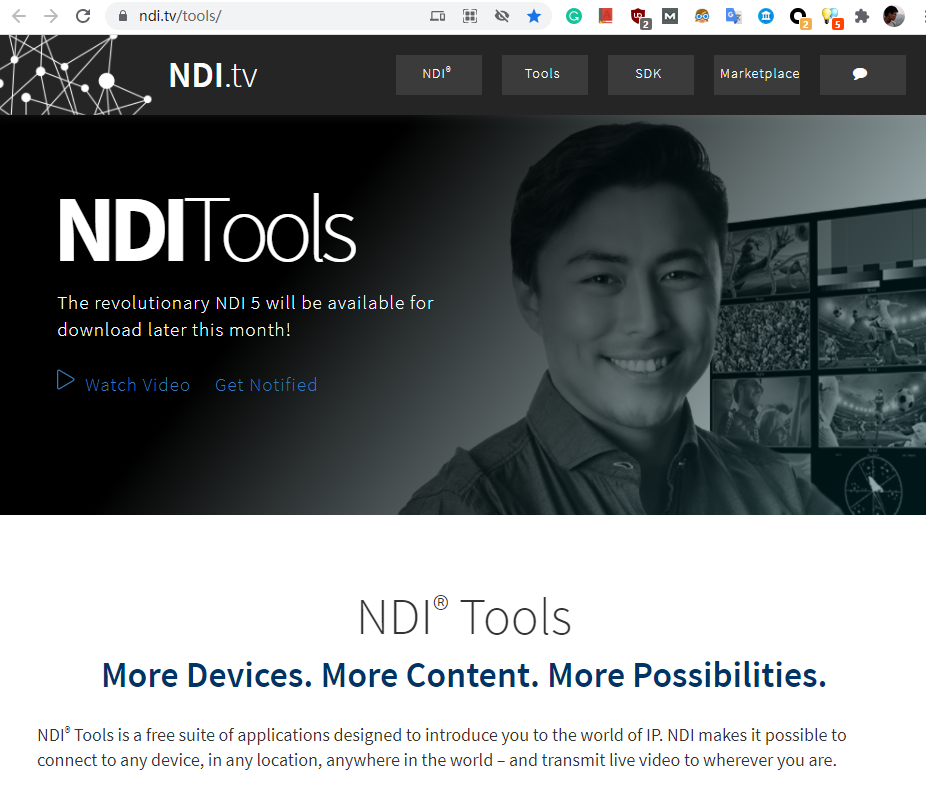
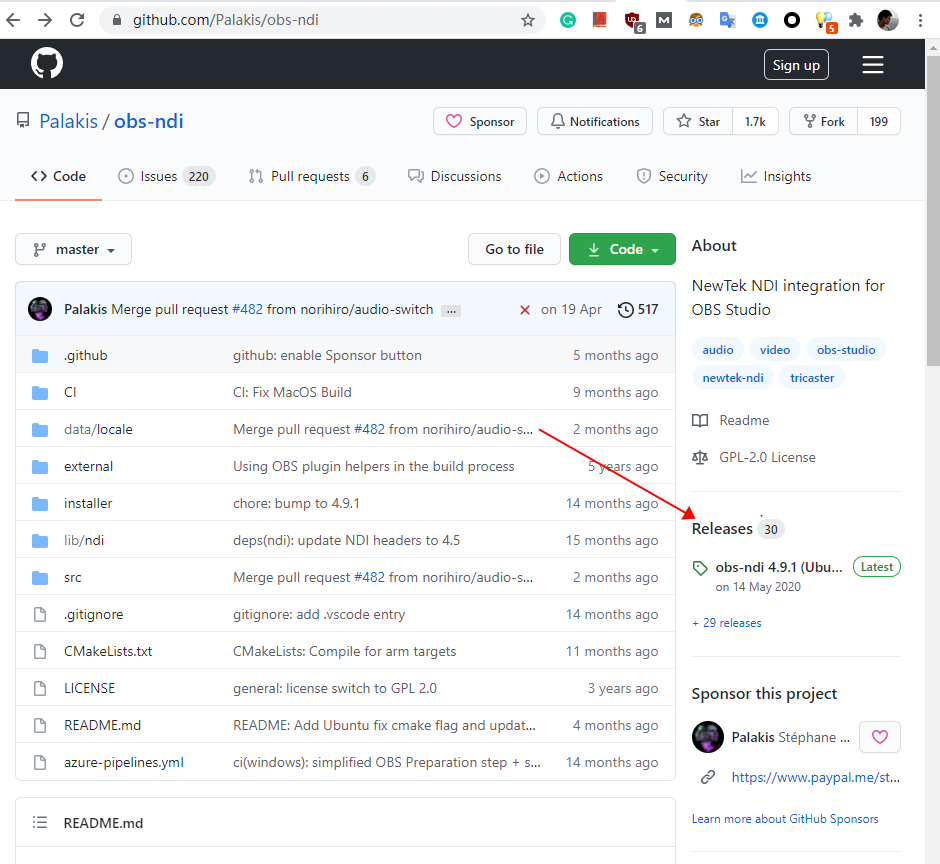
Meanwhile, we need to install an OBS plugin to brand sure that it detects NDI video sources. Nosotros can download the opensource tool (obs-ndi) from Github hither:
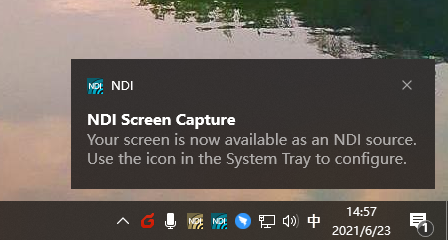
Once we launched our game, run the "Screen Capture" from NDI Tools. Afterward that, our gaming screen will be a video source and is gear up to be discovered automatically.
Next, we can capture the video on whatsoever computer that is in the same network. We volition open up OBS in that computer and add an NDI source (the one we put before):
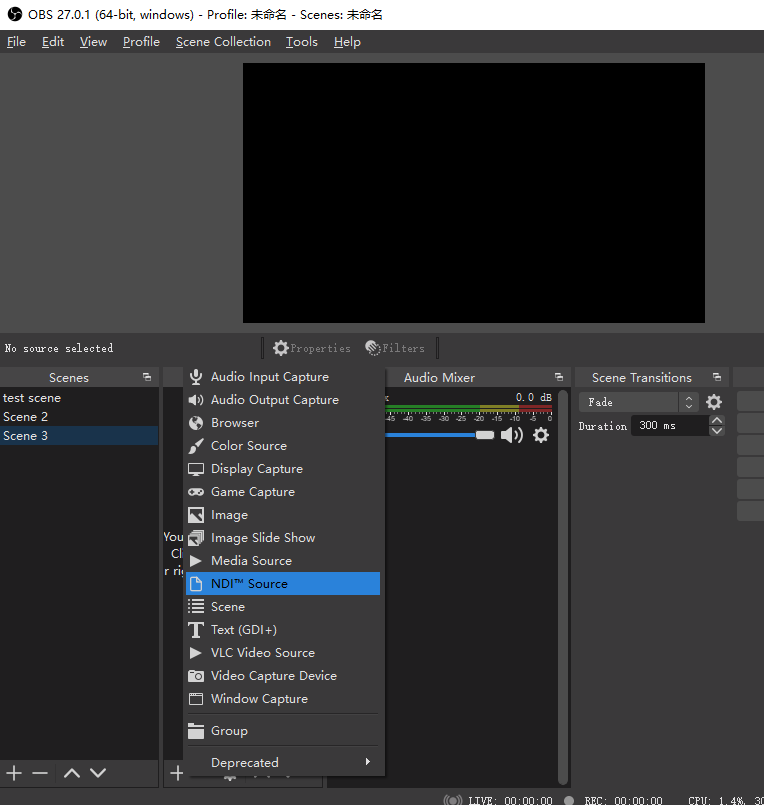
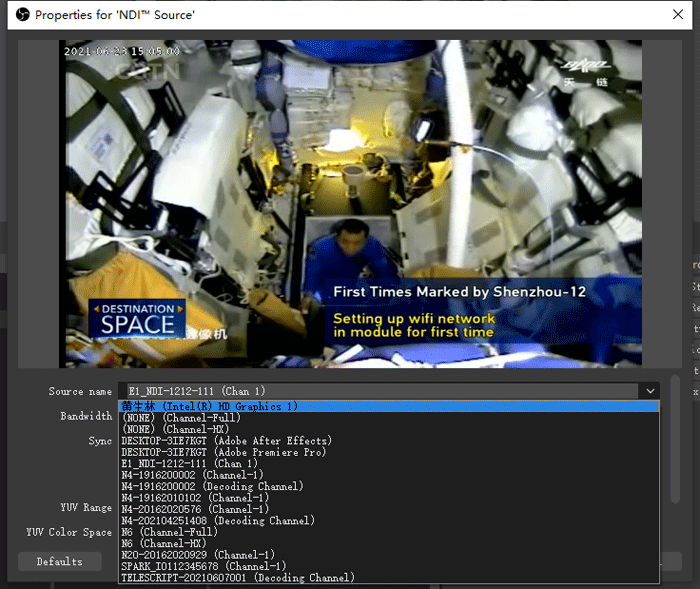
If you can observe the "NDI Source" option, effort to install the obs-ndi plugin again.
Now that nosotros have captured the video from NDI, let'south stream it to Facebook, Twitch, and Facebook through OBS. Nosotros will stream to Restream.io or Multi-RTMP plugin to finish the multi-platform distribution, but as we covered above:
Streaming Solution 6: Hardware Encoder + Integrated Console
OBS slows downwards your computer, and the stream settings sometimes are difficult. At the aforementioned time, relying also much on OBS increases the overall instability.
You might ask: are in that location whatever solutions that make our multi-platform streaming easier and more stable?
The answer is yes. For professional person streamers or gamers, using a hardware encoder is a meliorate pick. Normally, a hardware video encoder gives you the following benefits:
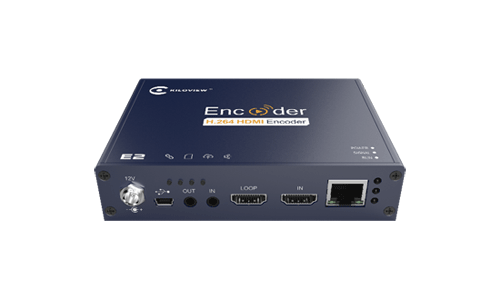
1. Piece of cake connection. Videos are sending from PC to encoder via cablevision connection (normally HDMI), and the encoder is continued to the Internet via Ethernet;
two. Integrated configuration. On the web-based console of the encoder, we can easily configure our stream settings in one identify (for multiple platforms). Once configured, the following stream experience will exist transparent to users;
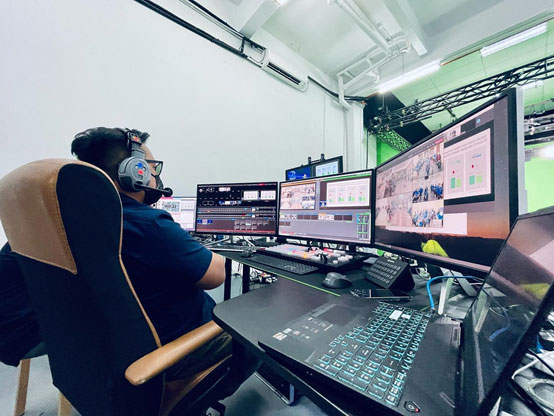
three. 24/7 performance. Hardware video encoders are designed for a long-fourth dimension stable working at low power consumption. And then, if y'all are working in a team and want to stream all the time, a hardware encoder is a good choice:
4. Video source diverseness. Other than standard screen capture, hardware encoders can go all types of video sources (such as cameras or webcams), which enlarges your range of stream materials.
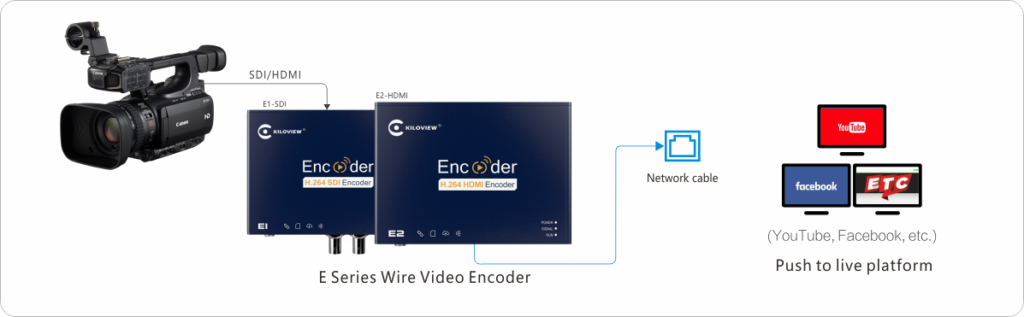
Kiloview E2 H.264 encoder is a suitable device for beginners, equally it comes with 1080P video streaming up to xvi platforms. Meanwhile, the competitive cost and free technical back up won't allow you down.
To start our stream to Youtube, Twitch and Facebook using a hardware encoder, we need to practise some initial configuration for network settings and accessibility. For Kiloview E series, you tin can go documentation here.
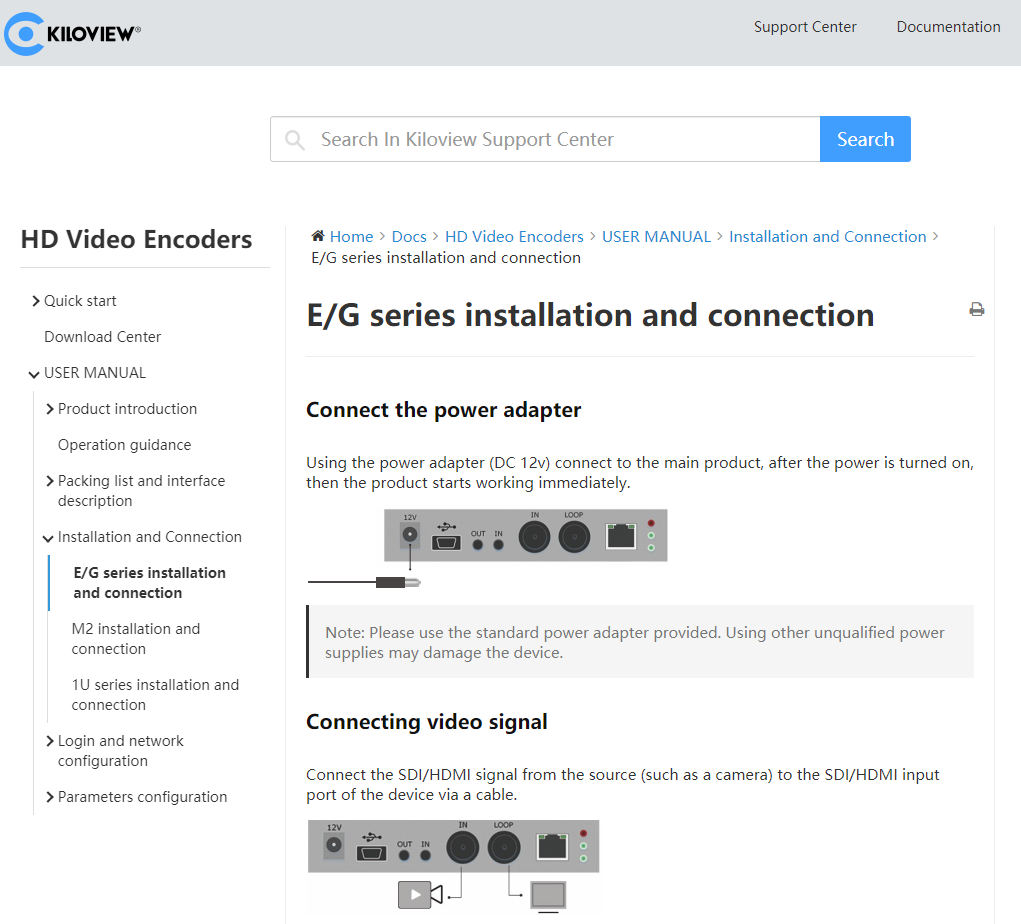
Next, we will connect our gear to the reckoner and network:
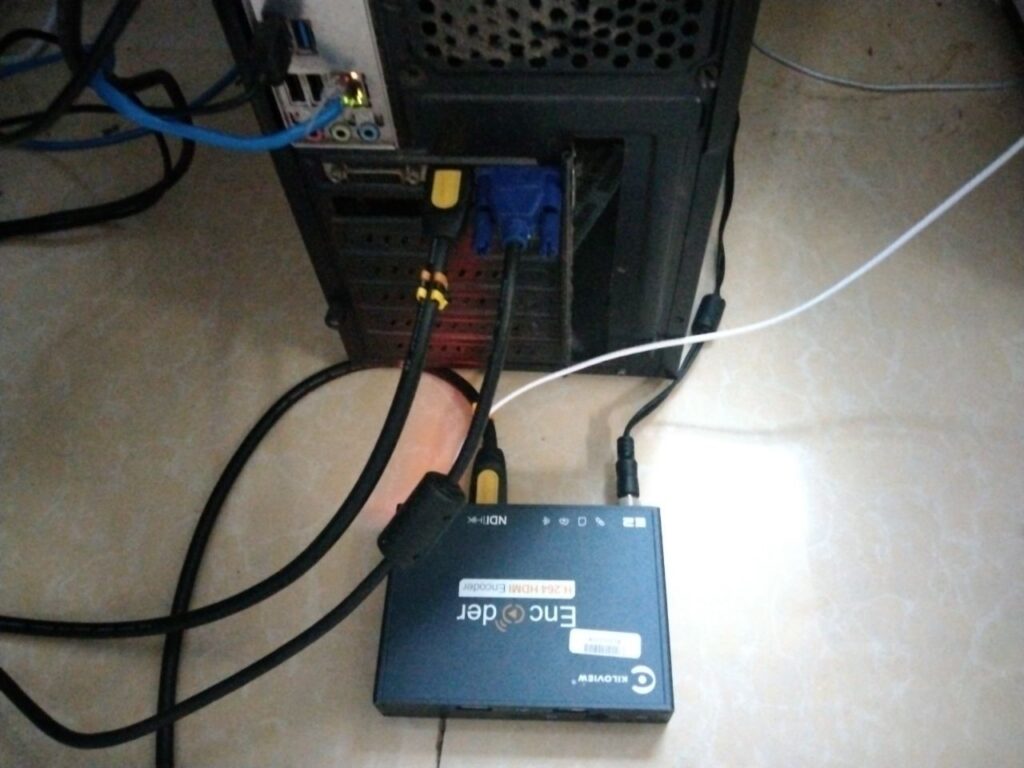
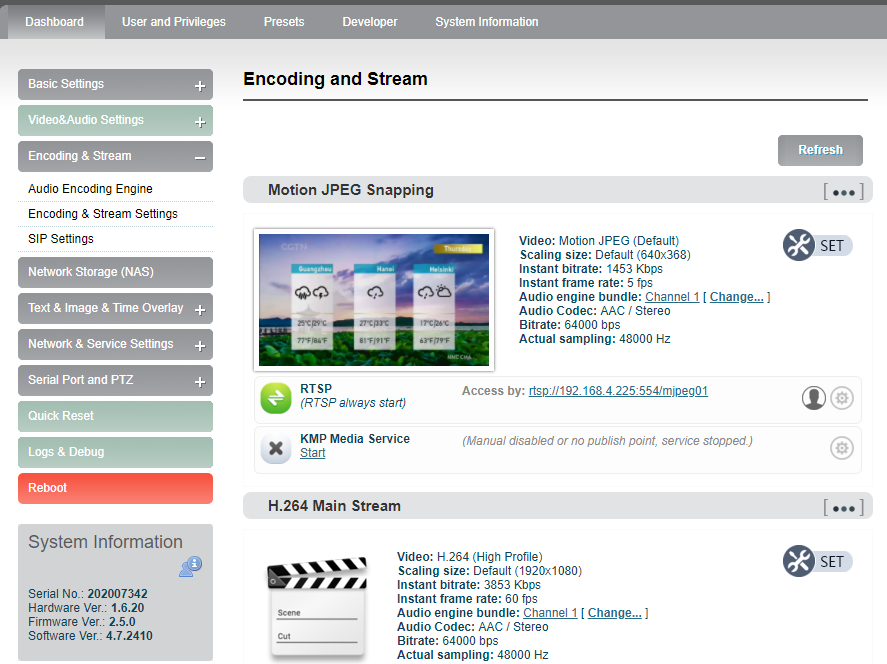
And then, we should find the video preview in "Encoding & Stream" -> "Encoding & Stream Settings" in the encoder's console folio:
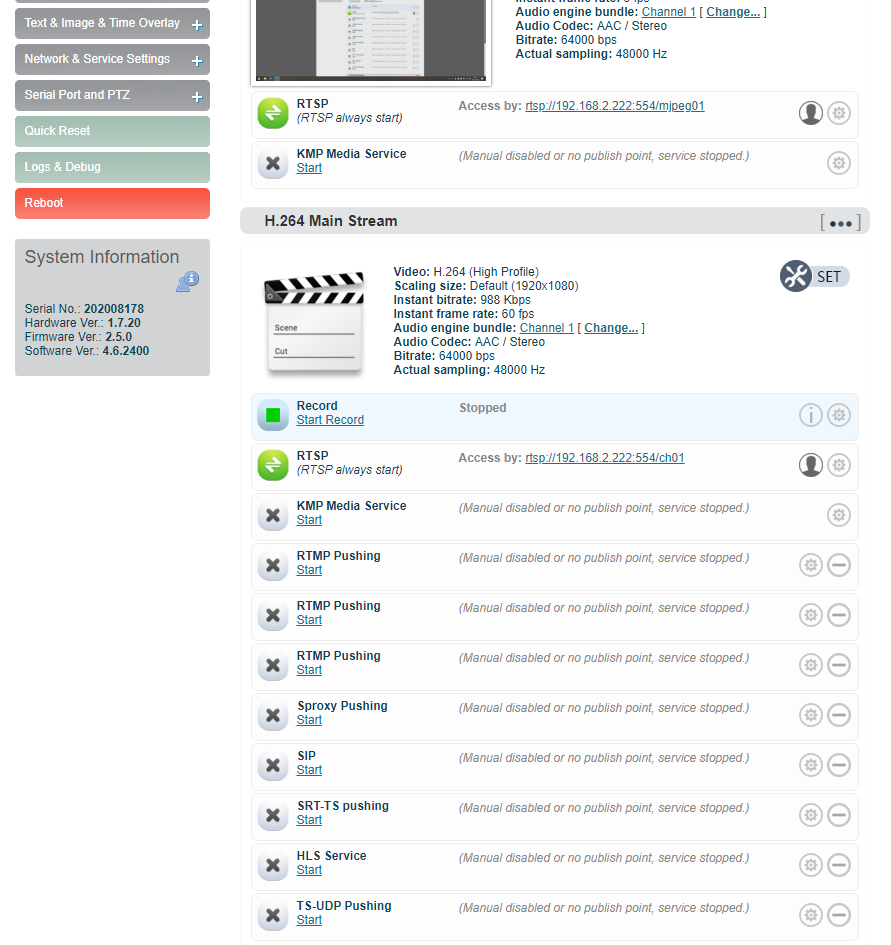
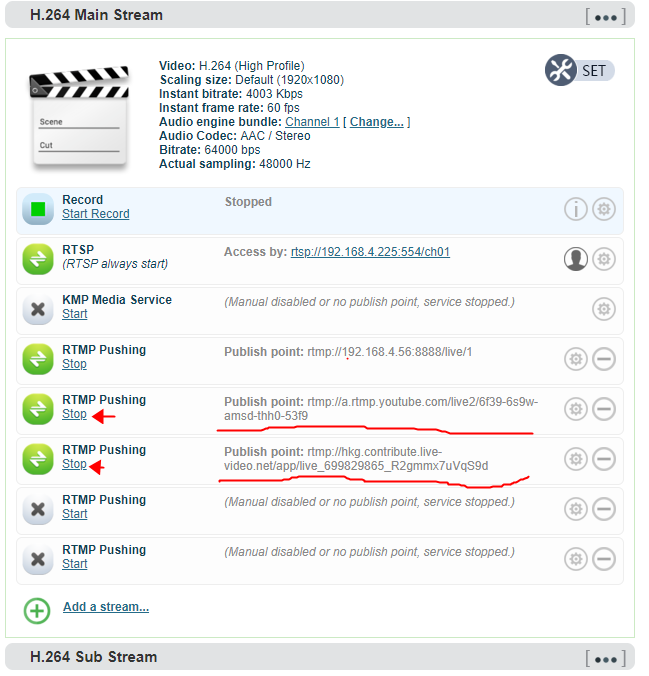
Side by side, in "H.264 Chief Stream" under the aforementioned console, we can add multiple RTMP streams and set the pushing URL/Key separately. If you accept bug getting your own streaming URL (remote destination RTMP URL address) and stream key, please refer to relevant content in our streaming solution two above:
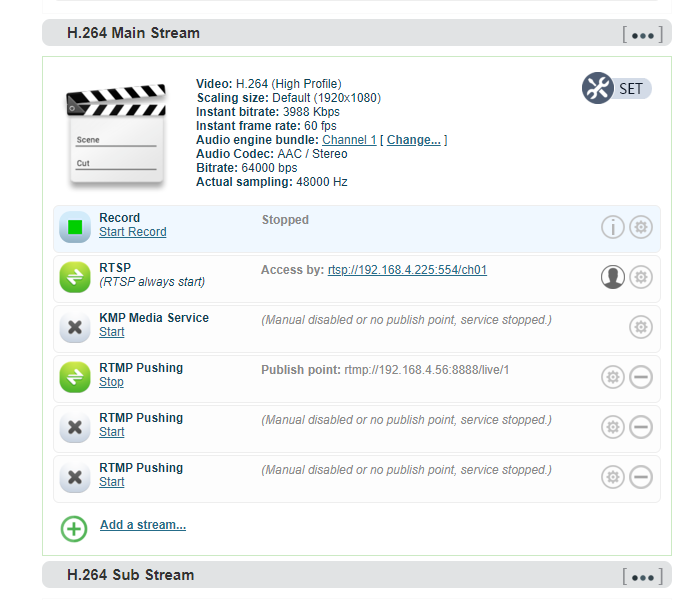
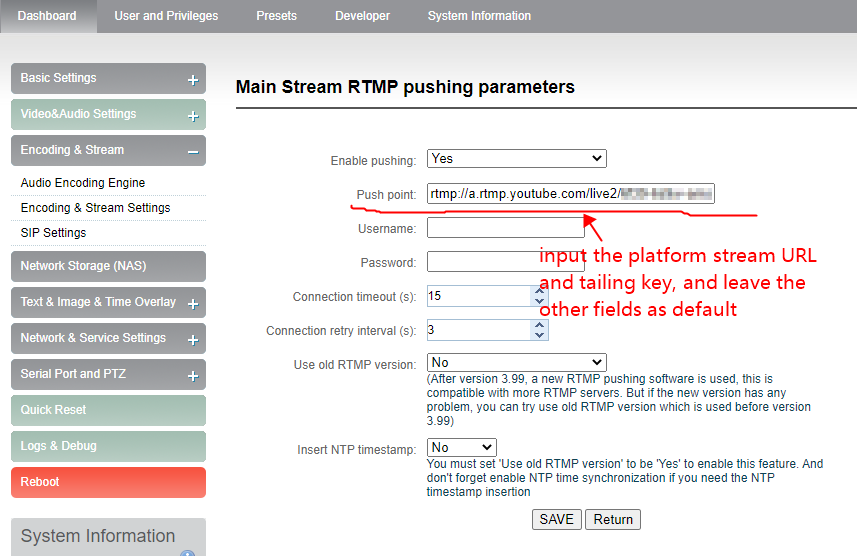
When we finished the RTMP server configuration, toggle the button in the front to kickoff/stop our stream.
That'due south information technology, bask.
FAQ about Multi-platform Stream
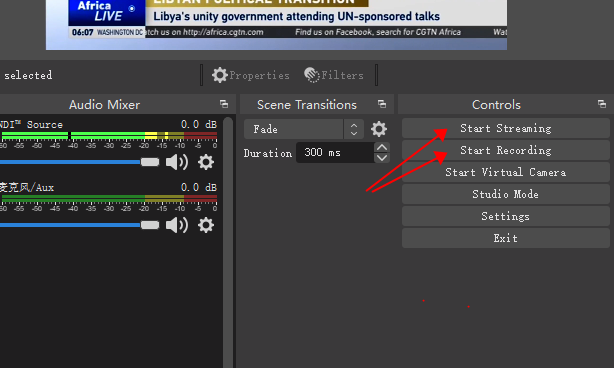
Q: Can OBS stream and tape at the same fourth dimension?
A: Yes, we can stream and record in OBS at the aforementioned time by clicking the respective buttons on the "Controls" panel:
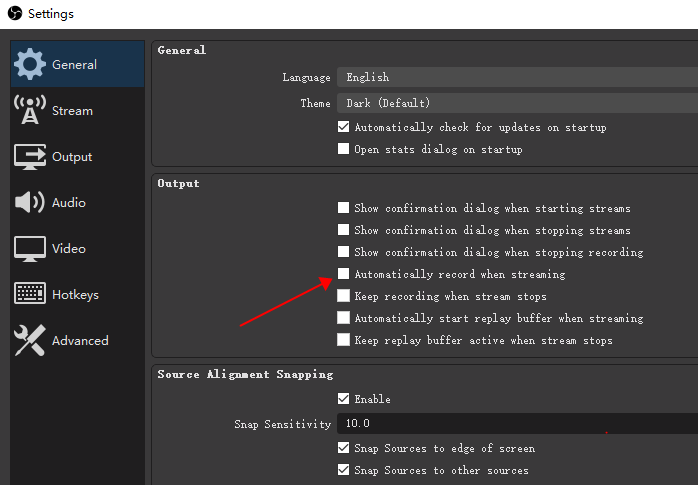
Meanwhile, it'due south recommended to tick the "Automatically record when streaming" option in settings if necessary:
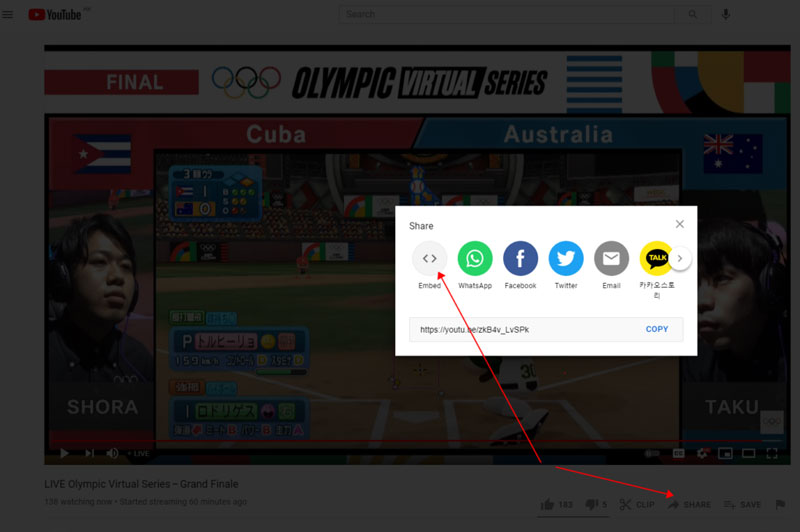
Q: How to Embed YouTube live stream on Facebook?
A: First, become to any YouTube live stream folio, and click on the "share" push button:
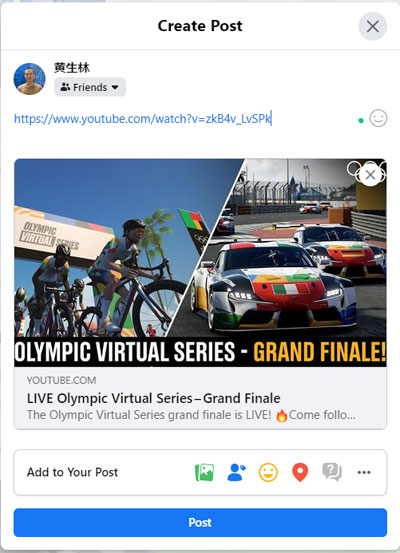
Q: How to get my Facebook/Youtube/Twitch stream key?
A: For Youtube stream key, please refer to "Streaming Solution 2: OBS (Screen Capture) + Multi-RTMP Plugin" above.
For Facebook stream central, get to https://www.facebook.com/live/producer/
For Twitch stream key, get to https://dashboard.twitch.tv set/settings/stream
Q: How to stream with ii computers?
A: Just as nosotros illustrated in solutions 4 and 5, we tin play a game on computer A and capture & stream on computer B past capture card or Apps such as NDI screen capture. The benefits are:
- Your calculator is not overstressed from running a game and streaming;
- Your game will not be slowed downwards because of a balanced bandwidth cost;
- You tin interact with your audition amend because of two isolated screens;
Q: How to stream from Xbox/PS4 to YouTube?
A: For PS4, you can observe a congenital-in choice in "Settings" -> "Account" -> "Link with Other Services" to connect your YouTube account for streaming. For Xbox, you need a streaming tool (OBS or hardware encoder) to button your live stream online.
Q: How to share twitch stream on Facebook?
A: Open up Twitch, become to the target stream, tap the sharing icon on the peak bar, choose "Facebook" from the pop-up list, and post it.
Q: How much data does twitch alive use? What is the twitch recommended upload speed?
A: According to Twitch, the recommended bitrates for unlike video resolutions are:
- 6000 kbps – 1080P 60fps
- 4500 kbps – 1080P 30fps
- 4500 kbps – 720P 60fps
- 3000 kbps – 720P 30fps
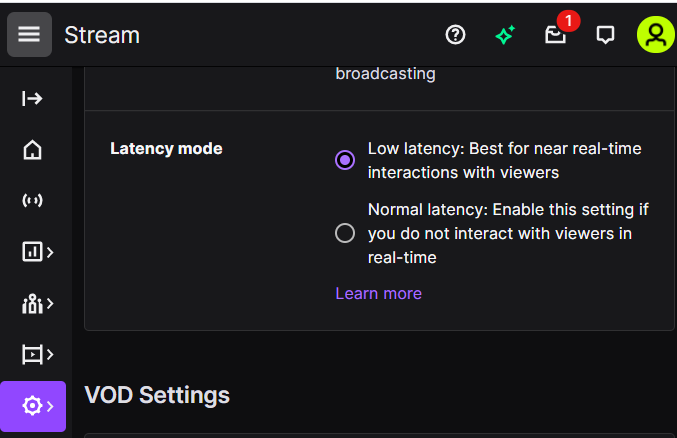
The default Twitch streaming speed mode for desktop Chrome, Firefox, Border, and the Twitch desktop app is "Low Latency", which enables real-time communications with viewers simply increases bandwidth cost. You tin can opt-out for normal latency style if your streaming suffers from a weak network.
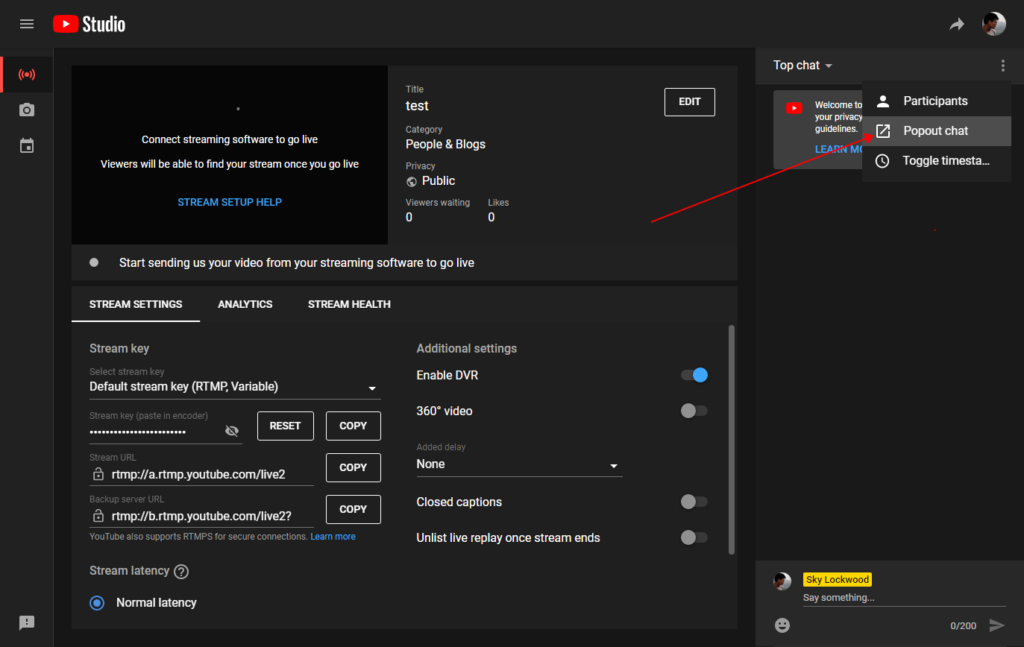
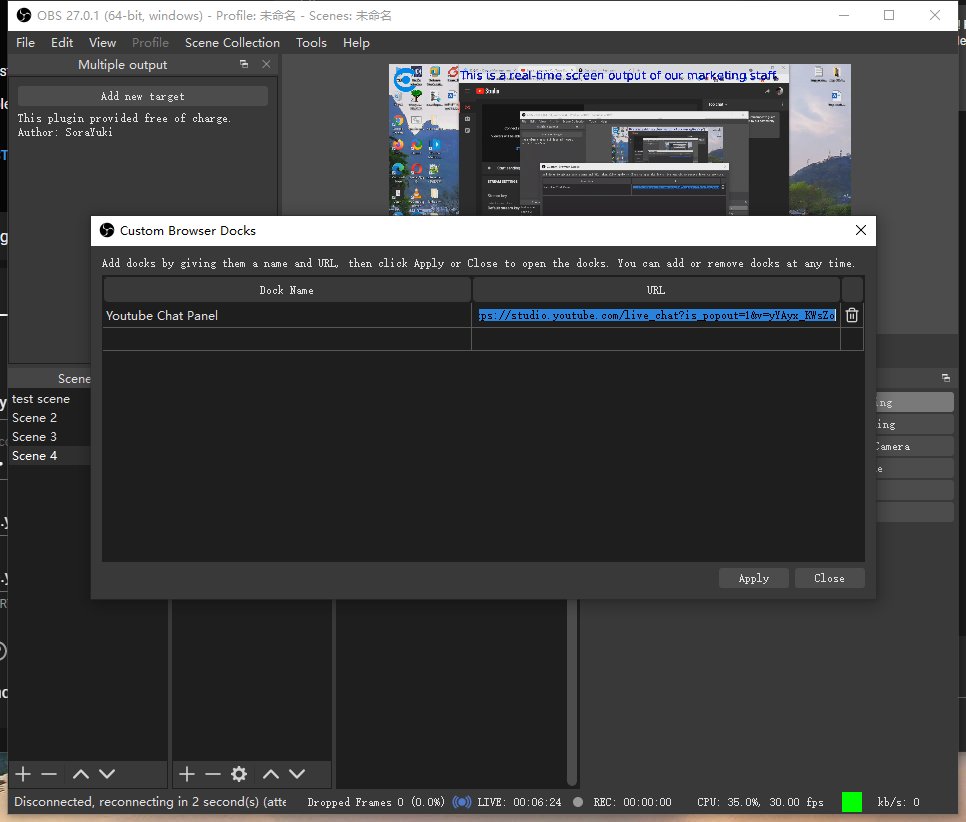
Q: How to add YouTube conversation to OBS?
A: Open YouTube Studio, and become to the live panel page. Then click the dotted carte on the top right, and choose "Popout chat" from it:
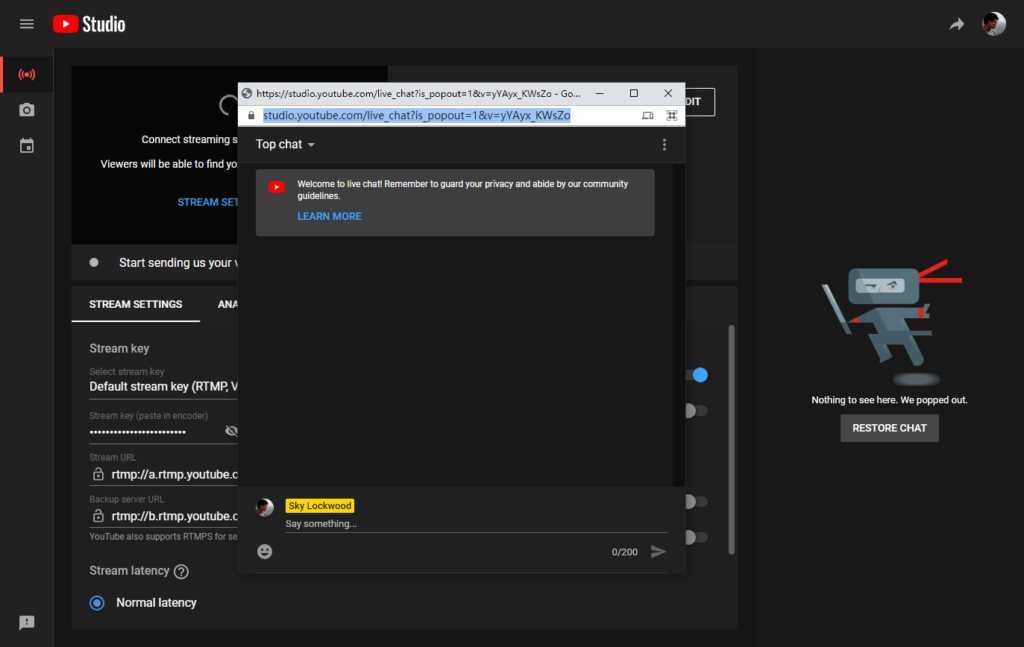
Copy the URL from the pop-out chatting browser window:
Back to OBS, choose "View" -> "Docks" -> "Custom Browser Docks":
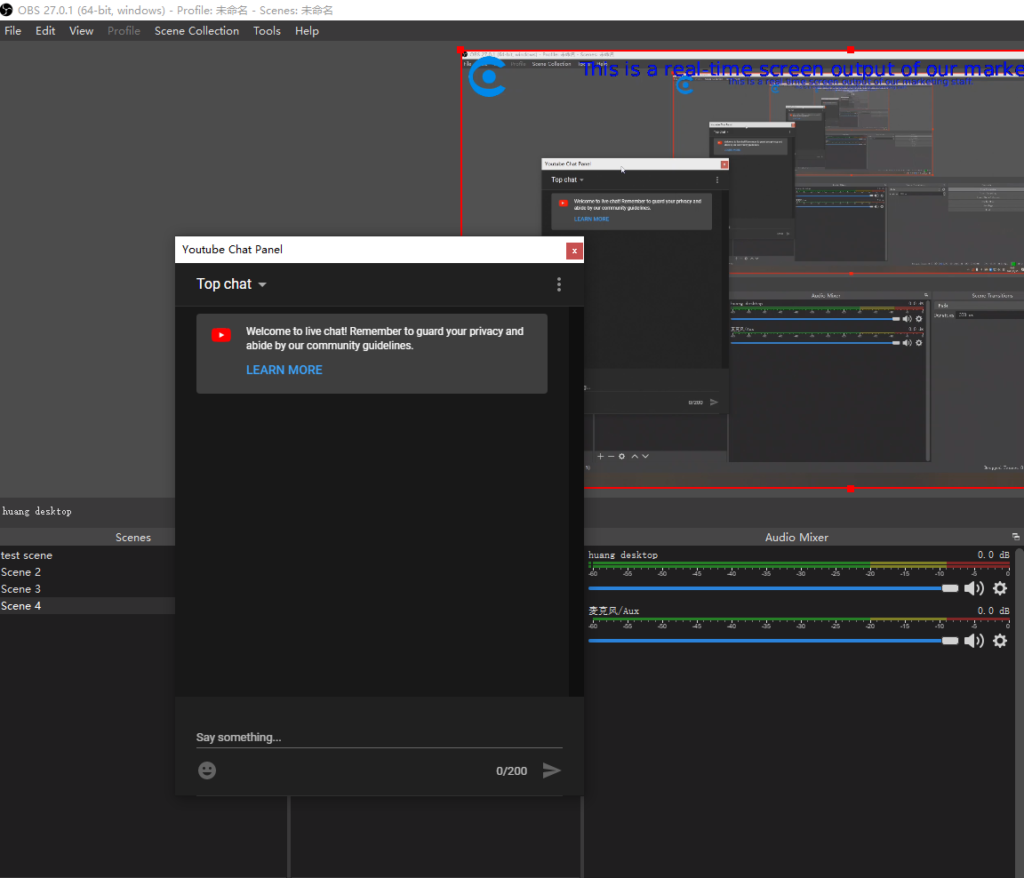
Here we've imported the Youtube live chat to OBS:
Q: Which one is better, YouTube vs twitch streaming?
A: Information technology depends on your niche, platform rules, profit expectations of the two platforms. Normally, Twitch is a proper platform that caters to the game community, while streamers can find their niche on Youtube. For punishment, Youtube tends to be more than lenient than Twitch. Meanwhile, Youtube'due south watching recommendation algorithm is more favorable for new streamers.
Source: https://www.kiloview.com/en/how-to-stream-to-youtube-twitch-and-facebook-at-the-same-time/
Posted by: diaztheridly.blogspot.com
0 Response to "How To Livestream To Facebook And Youtube Free"
Post a Comment